
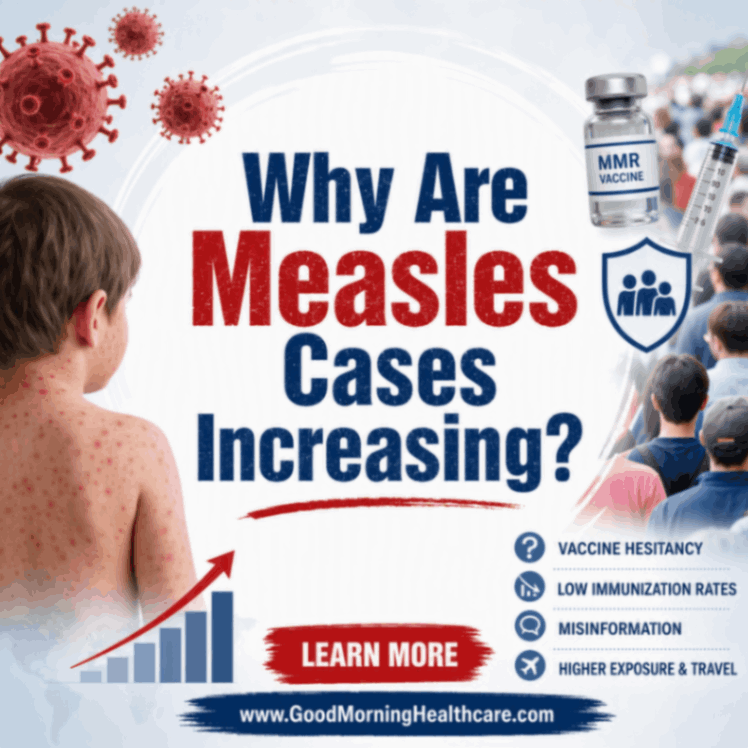
A disease once considered eliminated in the United States is making headlines again. Measles outbreaks are increasing across several states, reminding families and healthcare providers that this highly contagious virus remains a serious public health concern.
Although measles can usually be managed with supportive medical care, there is no antiviral cure. Treatment focuses on relieving symptoms, preventing complications, and protecting others from exposure. Vaccination remains the safest and most effective way to prevent infection.
Why Are Measles Cases Increasing?
Measles is one of the most contagious viruses known. According to the U.S. Centers for Disease Control and Prevention (CDC), up to 9 out of 10 unvaccinated people exposed to measles will become infected.
The virus spreads through the air when an infected person coughs or sneezes and can remain in a room for up to two hours after that person leaves.
Several factors have contributed to recent outbreaks:
- Lower childhood vaccination rates in some communities
- Missed routine vaccinations during the COVID-19 pandemic
- Increased international travel
- Vaccine misinformation
- Growing numbers of vaccine exemptions
According to the World Health Organization (WHO), measles remains one of the leading causes of vaccine-preventable deaths among young children worldwide despite the availability of a safe and effective vaccine.
| Measles Fact | Data |
|---|---|
| Contagiousness | 9 of 10 susceptible people become infected after exposure |
| Virus survives in air | Up to 2 hours |
| MMR effectiveness (1 dose) | 93% |
| MMR effectiveness (2 doses) | 97% |
| Hospitalization | 1 in 5 unvaccinated cases |
| Pneumonia | 1 in 20 children |
| Encephalitis | 1 in 1,000 children |
Common Measles Symptoms
Symptoms usually appear 7–14 days after exposure and often begin like a common viral illness before the characteristic rash develops.
Typical symptoms include:
- High fever
- Persistent cough
- Runny nose
- Red, watery eyes
- Tiny white Koplik spots inside the mouth
- A red rash that starts on the face and spreads downward
Anyone who develops these symptoms after exposure or international travel should call a healthcare provider before visiting a clinic or emergency department to reduce the risk of exposing others.
How Is Measles Treated?
There is no specific antiviral medication for routine measles infection.
Treatment generally includes:
- Plenty of fluids
- Rest
- Fever-reducing medications when appropriate
- Monitoring for complications
- Isolation to prevent further spread
Antibiotics do not treat the measles virus itself but may be prescribed if bacterial infections such as pneumonia or ear infections develop.
For certain children with measles, physicians may recommend vitamin A supplementation under medical supervision. However, vitamin A should never replace vaccination or be taken in high doses without medical guidance.
Possible Complications
While many healthy children recover fully, measles can cause serious complications.
According to the CDC:
- About 1 in 5 unvaccinated people with measles in the U.S. require hospitalization.
- Approximately 1 in 20 children develop pneumonia.
- Roughly 1 in 1,000 children develop encephalitis (brain swelling), which can result in permanent neurological damage.
- About 1 to 3 out of every 1,000 infected children die from respiratory or neurological complications.
Those at highest risk include:
- Children younger than five
- Adults over 20
- Pregnant women without immunity
- Immunocompromised individuals
What Should You Do After Exposure?
If you think you’ve been exposed to measles:
- Confirm your vaccination history.
- Contact your healthcare provider immediately.
- Avoid public places if symptoms develop.
- Follow guidance from your local health department.
For eligible individuals without immunity, the CDC recommends that an MMR vaccine given within 72 hours of exposure may help prevent illness. In certain high-risk situations, immune globulin may be recommended within six days after exposure.
Why Vaccination Matters
The measles, mumps, and rubella (MMR) vaccine remains one of the most effective vaccines available.
According to the CDC:
- One dose is approximately 93% effective
- Two doses are approximately 97% effective
High vaccination rates help protect infants who are too young to be vaccinated, people receiving cancer treatment, transplant recipients, and others with weakened immune systems who may not be able to receive live vaccines.
The Bottom Line
Measles is preventable, but it remains a serious infectious disease capable of causing hospitalization and life-threatening complications.
As cases continue to rise, healthcare providers, schools, employers, and families all play a role in limiting transmission. Early recognition, prompt isolation, and maintaining recommended MMR vaccination schedules remain the most effective strategies for protecting both individuals and communities.
If you’re unsure about your vaccination status, speak with your healthcare provider or consult your state’s immunization registry before traveling, returning to school, or spending time around infants or immunocompromised individuals.
Thank you, You will be automatically subscribed to the our newsletter.