
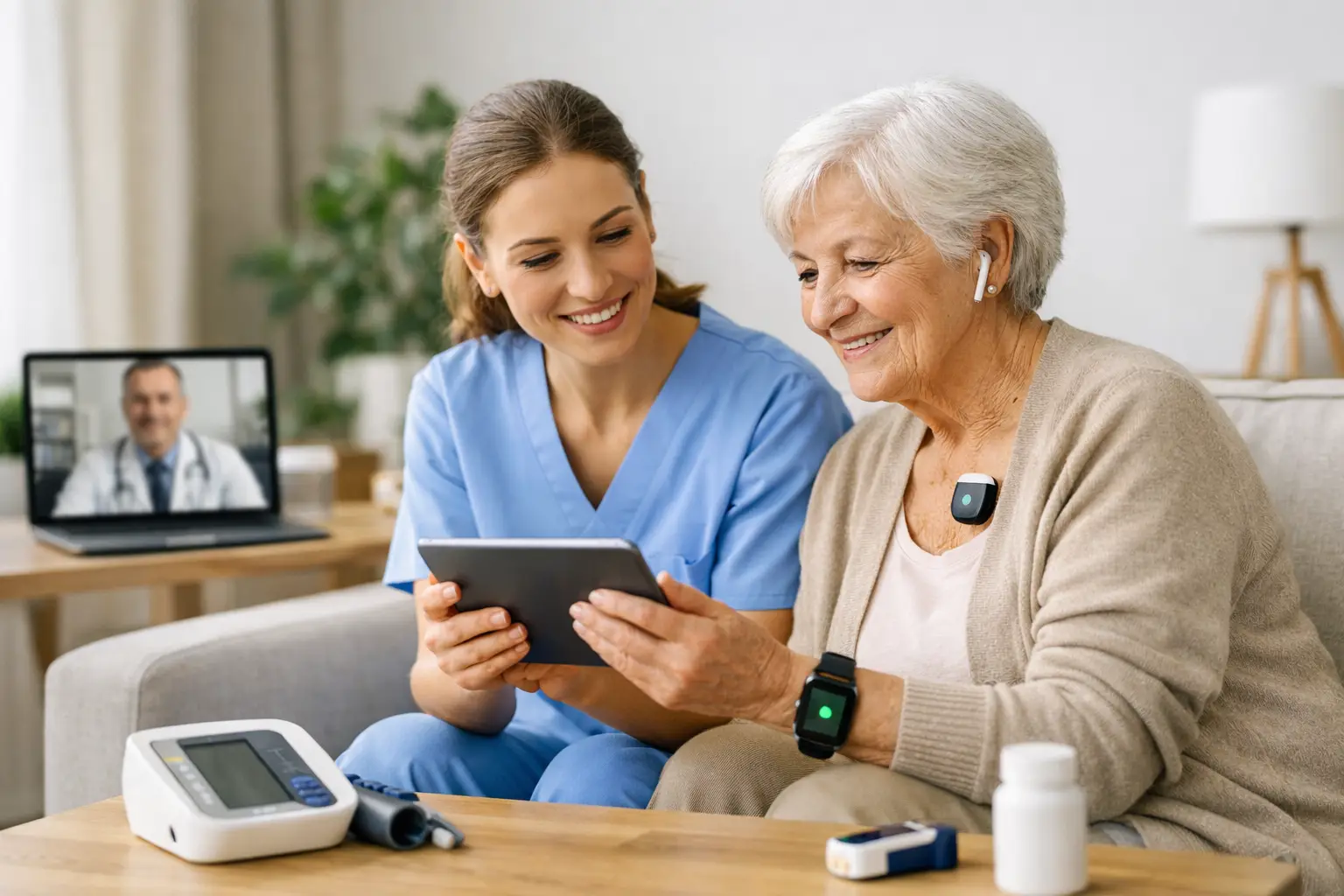
A blood-pressure cuff or connected scale on the kitchen table may seem simple, but for an older adult with hypertension, diabetes, or heart failure, it can create a valuable connection to the healthcare team between office visits.
That is the promise of remote patient monitoring (RPM) for seniors: using connected medical devices and clinical follow-up to track health conditions at home and identify concerning changes earlier.
But RPM is more than a device or smartphone app. Its value comes from collecting meaningful health data and having a clinical team act on it.
What Is Remote Patient Monitoring?
Remote patient monitoring allows patients to collect health information at home using connected medical devices that automatically transmit data to a healthcare provider.
Common RPM devices include:
- Blood-pressure monitors
- Digital weight scales
- Blood-glucose monitors
- Pulse oximeters
- Heart-rate monitors
According to the Centers for Medicare & Medicaid Services (CMS), Medicare’s RPM framework includes three important components: patient education and device setup, connected-device data collection, and clinical treatment or management based on that information.
For example, a senior with heart failure may monitor weight every day. A sudden increase can indicate fluid retention and prompt the care team to review medications or recommend an evaluation.
Who Can Benefit From RPM?
RPM can be particularly useful for seniors managing chronic conditions that can be tracked through measurable health data.
Common examples include:
- High blood pressure
- Heart failure
- Diabetes
- Chronic obstructive pulmonary disease (COPD)
- Recovery after hospitalization
The goal isn’t to collect as much data as possible. It is to collect the right data that can lead to a clinical decision.
A useful question before enrolling is:
What will the healthcare team do differently because of this reading?
If there is no clear answer, the technology may add complexity without providing much benefit.
RPM Can Help Seniors Age at Home
One potential advantage of remote monitoring is convenience.
Older adults who have mobility limitations, transportation challenges, or live far from a medical office may be able to share certain health information without making an additional trip.
RPM can also give clinicians a better picture of what happens between appointments. A single blood-pressure reading in a doctor’s office may not show the same pattern as measurements collected consistently at home.
Research continues to evaluate exactly which RPM programs produce the best outcomes. A 2026 systematic review of 65 randomized trials involving approximately 23,000 people with heart failure found that remote monitoring was associated with lower mortality and fewer heart-failure hospitalizations, although the researchers noted differences among monitoring approaches and limitations in the evidence.
The Technology Needs to Be Senior-Friendly
The best RPM program isn’t necessarily the most sophisticated one.
For many seniors, simple technology works best:
- Large, easy-to-read displays
- One-button operation
- Automatic data transmission
- Clear written or verbal instructions
- Minimal passwords and troubleshooting
- Caregiver support when needed
A connected blood-pressure cuff that is difficult to position correctly can produce inaccurate readings. A scale placed incorrectly can also create misleading results.
That’s why training is just as important as the device.
GoodMorningHealthcare has also explored how wearable and connected health technologies are becoming part of healthcare delivery in Smart Tech Is Beating Heart Disease—Are You Using It? and New Horizons in Health Monitoring: The Oura and Dexcom Partnership.
Who Watches the Data?
This may be the most important question to ask before enrolling in an RPM program.
Patients should know:
- Who reviews the readings?
- How often are they reviewed?
- What happens when a reading is abnormal?
- How quickly will someone contact the patient?
- What symptoms require immediate medical attention?
RPM should not create the impression that someone is watching every reading 24/7.
A strong program has clear clinical protocols for responding to abnormal measurements. Without that workflow, RPM can create unnecessary alerts and increase staff workload instead of improving care.
Does Medicare Cover Remote Patient Monitoring?
Medicare covers certain remote patient monitoring services, provided applicable requirements are met.
CMS says Medicare RPM can cover monitoring of physiologic data for both chronic and acute conditions. Patients generally must have a condition requiring monitoring and use an eligible connected medical device that digitally transmits health information.
However, coverage does not necessarily mean a patient pays nothing. Medicare Advantage, Medicaid, and commercial insurance plans can have different rules and cost-sharing requirements.
Before enrolling, ask:
What will I pay out of pocket?
Also ask whether the device, cellular connectivity, setup, replacement equipment, and clinical monitoring are included.
For additional information about Medicare and insurance decisions, see GoodMorningHealthcare’s Four Tips to Handle Open Enrollment.
RPM Is Not Emergency Monitoring
Remote patient monitoring should never replace emergency medical care.
If someone experiences symptoms such as severe shortness of breath, chest pain, sudden weakness, confusion, or possible stroke symptoms, they should seek emergency medical attention rather than wait for an RPM alert or a call from a healthcare team.
RPM is designed to support ongoing clinical management—not emergency response.
Questions to Ask Before Joining an RPM Program
Before enrolling, seniors and caregivers should ask:
- Which condition will RPM help manage?
- What device will I use?
- Does the device transmit readings automatically?
- Who reviews my data?
- What happens when a reading is abnormal?
- How quickly will someone respond?
- What will my insurance cover?
- What symptoms require immediate medical attention?
- Who is responsible for coordinating my care if I see multiple providers?
That last question matters. A senior may have a primary-care physician, cardiologist, endocrinologist, pharmacist, and home-health provider. Someone needs to clearly own the response to an alert.
The Bottom Line
Remote patient monitoring for seniors can make healthcare more connected without requiring another trip to the doctor’s office.
But the value isn’t in the blood-pressure cuff, scale, or app. The value comes from turning home health data into timely clinical action.
For seniors managing chronic conditions, the best RPM programs should be simple, clinically meaningful, affordable, and connected to a trusted care team.
The goal should not be more monitoring.
It should be better care between visits.
Thank you, You will be automatically subscribed to the our newsletter.