
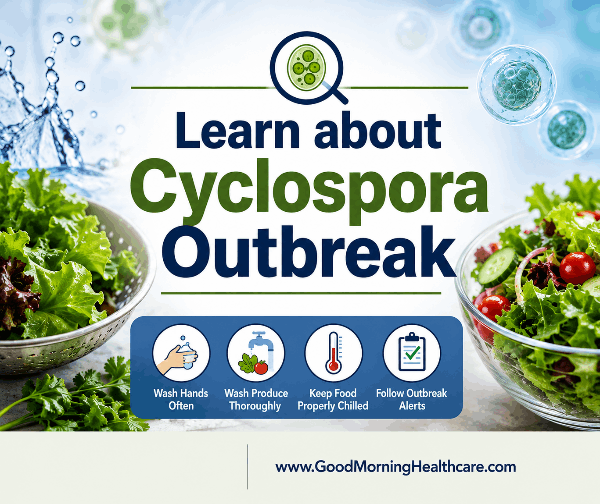
A salad, fresh herbs, or a restaurant meal can become part of a public-health investigation days or even weeks after it was eaten. That’s one reason a Cyclospora outbreak can be difficult to identify.
Cyclospora is a parasite that can cause prolonged, sometimes recurring diarrhea. Unlike a typical stomach bug that may disappear within a day or two, Cyclospora infections can last much longer and may return after seeming to improve.
Here’s what consumers should know about symptoms, testing, treatment and food safety.
What Is Cyclospora?
Cyclospora cayetanensis is a microscopic parasite that infects the digestive system. People become infected by swallowing food or water contaminated with the parasite.
In the United States, outbreaks have been associated with various types of fresh produce, including leafy greens, herbs and other foods eaten raw. However, no single food is always responsible for an outbreak.
Cyclospora is also different from many other intestinal infections because the parasite generally needs time outside the body before it becomes infectious. As a result, direct person-to-person transmission is unlikely. Contamination is more often connected to food or water somewhere along the supply chain.
What Are the Symptoms?
Symptoms usually begin about one week after exposure, although they can appear roughly two days to two weeks later.
The most common symptom is frequent, watery diarrhea. Other symptoms can include:
- Stomach cramps or bloating
- Nausea
- Loss of appetite
- Fatigue
- Increased gas
- Low-grade fever
- Weight loss
One of the frustrating features of Cyclospora is that symptoms can improve and then return. Without treatment, illness can last for weeks or, in some cases, longer.
CDC: Symptoms of Cyclosporiasis
Internal link opportunity: Add a link here to your GoodMorningHealthcare article about diarrhea, dehydration, food poisoning, or digestive health, if you have one.
When Should You See a Doctor?
You don’t necessarily need medical care for every short episode of diarrhea. But talk with a healthcare professional if diarrhea:
- Lasts more than a few days
- Is severe or keeps coming back
- Causes significant weight loss
- Makes it difficult to drink enough fluids
- Occurs after a known Cyclospora exposure or outbreak
- Comes with significant abdominal pain or fever
Seek prompt medical attention if you develop signs of dehydration, such as dizziness, very little urination, unusually dark urine, dry mouth or confusion.
Older adults, young children, pregnant people and people with weakened immune systems should be particularly cautious about prolonged diarrhea and dehydration.
Internal link opportunity: This is a good place to link to a GoodMorningHealthcare article about dehydration or when diarrhea requires medical attention.
Why Testing Matters
Cyclospora is not always included in routine stool testing. If you have persistent or recurring diarrhea, tell your healthcare professional about your symptoms and any possible exposures.
Mention if you recently:
- Ate raw or fresh produce
- Ate at a restaurant connected to an outbreak
- Traveled outside the United States
- Heard about a local Cyclospora outbreak
A healthcare professional may order a stool test specifically designed to detect Cyclospora or use a molecular test that includes the parasite.
CDC: Diagnosis and Testing for Cyclosporiasis
How Is Cyclospora Treated?
The standard treatment for confirmed Cyclospora infection is the prescription antibiotic trimethoprim-sulfamethoxazole.
Treatment decisions should be made with a healthcare professional, especially for people who have medication allergies, take other medications, are pregnant or have kidney problems.
Getting the correct diagnosis matters because untreated Cyclospora infection can persist or relapse.
CDC: Clinical Care of Cyclosporiasis
Internal link opportunity: If you have an article about prescription drugs, antibiotics, medication safety, or prescription drug benefits, this would be a natural internal link.
How Can You Reduce Your Risk?
Food safety cannot eliminate every risk of foodborne illness, but basic precautions can help.
Wash your hands before preparing food and after handling potentially contaminated items.
Wash fresh fruits and vegetables under running water before eating, cutting or cooking them. Do not use soap, bleach or household cleaning products on produce.
FDA: Selecting and Serving Produce Safely
Keep refrigerated foods properly chilled and prevent raw meat and poultry from contacting foods that are ready to eat.
If health officials identify a specific food in an outbreak, follow the instructions carefully. Don’t assume that every product in the same food category is unsafe.
Also remember that food can look, smell and taste normal even when it is contaminated.
Internal link opportunity: Link to your GoodMorningHealthcare article about food safety or foodborne illness here.
What If You Ate Food Named in an Outbreak Alert?
First, check the details of the alert. Look for the specific brand, product, package size, lot number, dates or locationsidentified by public-health officials.
The FDA’s food-safety pages provide information about recalls and foodborne illness investigations.
FDA: Food Safety and Foodborne Illness
If you have the affected food, follow the instructions to discard or return it. Clean surfaces and containers that may have come into contact with it.
If you ate the food but feel well, monitoring for symptoms is generally more useful than taking antibiotics on your own.
If symptoms develop, write down when they started and what you ate during the previous two weeks. That information can help your healthcare professional determine whether Cyclospora testing is appropriate.
The Bottom Line
Cyclospora isn’t your typical one-day stomach bug. Persistent or recurring watery diarrhea—especially after eating fresh produce, dining at a restaurant linked to an outbreak, or traveling—deserves attention.
The good news is that Cyclospora can be diagnosed and treated. The most important steps are to recognize persistent symptoms, tell your healthcare professional about possible food or travel exposures, follow public-health alerts and practice basic food-safety habits.
Learn More
CDC: Cyclospora (Cyclosporiasis)
CDC: Information for the Public
Thank you, You will be automatically subscribed to the our newsletter.