
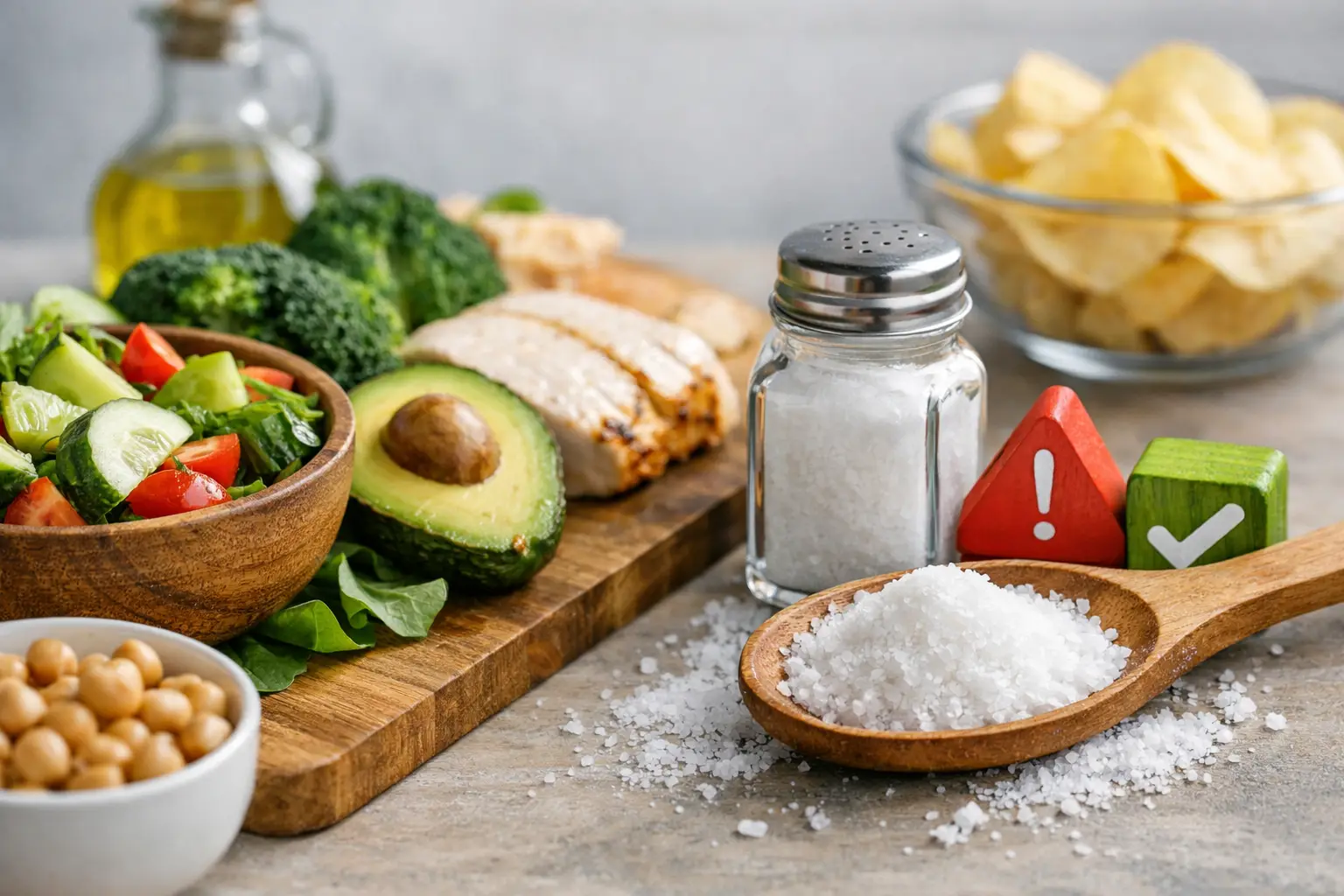
Most Americans don’t get too much sodium simply because they add too much salt to their food. The bigger issue is sodium hidden in everyday foods—packaged meals, restaurant dishes, deli meats, sauces, soups, and snacks. If you want to reduce your sodium intake, start by identifying these common sources rather than trying to eliminate every grain of salt from your diet.
That distinction matters. Sodium is an essential mineral involved in fluid balance, nerve signaling, and muscle function. Yet regularly consuming more than the body needs can raise blood pressure, increasing the risk of heart disease and stroke. A practical approach can lower intake without making food bland, creating unnecessary food anxiety, or conflicting with a medical treatment plan.
Why sodium reduction is a healthcare issue
Federal dietary guidance recommends limiting sodium to less than 2,300 milligrams per day for people ages 14 and older. That is about one teaspoon of table salt in total, but sodium comes from far more than the salt shaker. The American Heart Association has said an ideal limit of 1,500 milligrams a day may be appropriate for most adults, especially for people with high blood pressure.
For health systems, this is also a population-health issue. High blood pressure is common, often has no symptoms, and contributes to costly preventable complications. Small changes in the food environment – clearer labeling, lower-sodium packaged foods, and better restaurant options – can make healthier choices easier at scale.
Still, a single target does not fit everyone perfectly. People with heart failure, kidney disease, liver disease, uncontrolled high blood pressure, or certain endocrine conditions may have individualized sodium or fluid instructions. Athletes training for long periods in heat, people with heavy sweating from physically demanding work, and those with prolonged vomiting or diarrhea may have different short-term needs. Follow the plan from the clinician who knows your medications, diagnoses, and lab results.
Where most sodium actually comes from
The biggest sources are often everyday foods, not obviously salty snacks. Bread and rolls, pizza, sandwiches, cold cuts, soups, burritos and tacos, savory snacks, cheese, and chicken dishes can all add up quickly. Sodium also appears in foods that taste sweet, including some breakfast cereals, baked goods, and sauces.
Restaurant meals deserve special attention because portions are large and recipes may rely on salt for flavor and preservation. A sandwich with deli meat, cheese, bread, pickles, and a condiment can contain most of a day’s sodium before dinner. This is not an argument to avoid restaurants altogether. It is a reason to identify the few choices that have the largest impact.
Read the label with a specific goal
On U.S. Nutrition Facts labels, 5% Daily Value or less of sodium per serving is considered low, while 20% or more is high. Check both the milligrams and the serving size. A soup label may look reasonable until you notice that the container holds two servings.
Compare similar products rather than searching for a perfectly sodium-free option. If one jar of pasta sauce has 320 milligrams per half-cup serving and another has 520 milligrams, the lower-sodium choice is meaningful, particularly if it is a food your household buys often. Canned beans, broths, frozen meals, cottage cheese, salad dressings, and condiments are especially useful categories for comparison.
Terms such as “reduced sodium” can help, but they are relative claims. A reduced-sodium product has less sodium than its standard version, not necessarily a low amount. “No salt added” is different: it means salt was not added during processing, though the food can still contain naturally occurring sodium.
How to reduce sodium intake safely at home
Start with changes that preserve convenience. If your usual lunch is canned soup, choose a lower-sodium version, add frozen vegetables and no-salt-added beans, and pair it with fruit or yogurt. If you rely on sandwiches, rotate in roasted chicken, egg, tuna prepared with less salt, or leftover home-cooked proteins instead of cured deli meat most days.
Build flavor through acid, aromatics, and texture. Lemon or lime juice, vinegar, garlic, onion, ginger, herbs, pepper, smoked paprika, and salt-free seasoning blends can make a lower-sodium meal taste complete. Rinsing canned beans or vegetables can also reduce some of the sodium from packing liquid.
The most sustainable plan is usually gradual. Taste preferences adapt over several weeks, and sharply cutting salt overnight may make meals feel disappointing enough that the change does not last. Try reducing one high-sodium routine at a time: a daily instant noodle lunch, frequent frozen pizza, or a habitual late-night snack.
For a household strategy, consider these four high-impact swaps:
- Choose no-salt-added or lower-sodium canned beans, tomatoes, and broth when available.
- Cook a larger batch of grains, proteins, or vegetables once, then use leftovers for quick meals instead of relying on packaged entrées.
- Keep flavorful low-sodium staples on hand, such as plain yogurt, unsalted nuts, fruit, eggs, oats, and frozen vegetables without sauce.
- Put salty condiments on the table rather than mixing them into the whole recipe, so each person can control the amount.
These changes are not about judging foods as good or bad. They help shift sodium away from default eating patterns and back toward intentional choices.
Eating out without guessing
Nutrition information is available from many chain restaurants, but it can be time-consuming to review in the moment. A few ordering habits can lower sodium even when exact numbers are not posted. Ask for sauces, dressings, cheese, and pickled toppings on the side. Choose grilled or roasted preparations over cured, smoked, breaded, or heavily sauced options. Split a large entrée, particularly if it includes soup, fries, or a salty side dish.
Be careful with substitutions that sound healthier but are not automatically lower in sodium. A salad can carry substantial sodium from cheese, croutons, dressing, deli meat, or seasoned chicken. A plant-based meat substitute may be lower in saturated fat than a burger but still high in sodium. The right choice depends on the whole meal and a person’s health priorities.
When “less salt” needs medical guidance
Do not use potassium-based salt substitutes without checking first if you have kidney disease, take an ACE inhibitor, ARB, potassium-sparing diuretic, or other medication that can raise potassium levels. These products can be useful for some people, but potassium can become unsafe when the kidneys cannot clear it adequately or when medications affect potassium balance.
Also avoid treating dietary sodium reduction as a replacement for prescribed blood pressure medication. Food changes can support blood pressure control, but medication adjustments should be made with a clinician. If you have been told to follow a fluid restriction or a specific sodium limit because of heart failure or kidney disease, use that plan rather than a general online target.
Symptoms such as confusion, fainting, severe weakness, seizures, or persistent vomiting require prompt medical attention. They can have many causes, including serious electrolyte or dehydration problems, and should not be managed by adding or removing salt at home without guidance.
Make progress visible, not perfect
For one week, look at the sodium content of the foods you eat most often. Not every food, and not every meal – just the repeat purchases. That short audit usually reveals one or two easy opportunities: a different soup, less deli meat, a lower-sodium sauce, or fewer restaurant meals each week.
If you monitor blood pressure at home, record readings consistently and bring them to medical appointments. This gives patients and clinicians a more useful picture than guessing whether a dietary change is working.
The goal is not a joyless diet or a flawless daily number. It is to make the foods you eat most often work better for your long-term health, one realistic swap at a time.
[…] supports normal circulation, but it is only one piece of blood pressure management alongside sleep, sodium intake, activity, stress, kidney health, medications, and underlying cardiovascular disease. The most […]