
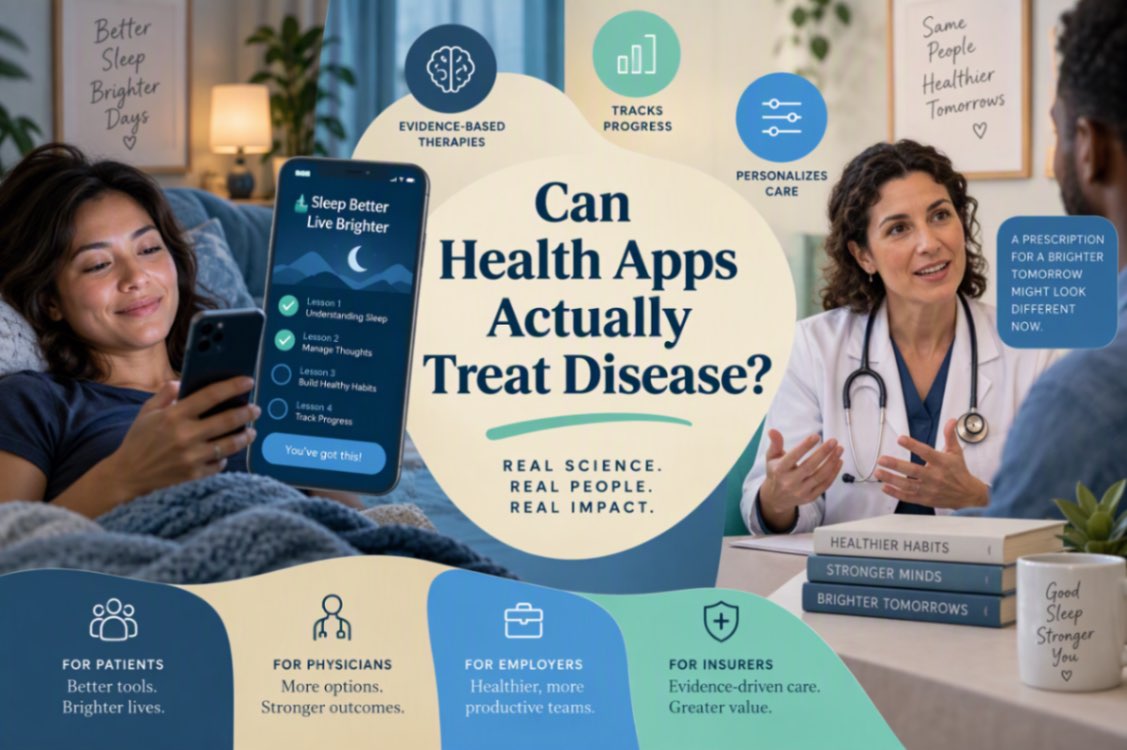
A prescription for insomnia may not come in a pill bottle. It could arrive as a clinician-referred smartphone app that delivers cognitive behavioral therapy over several weeks, tracks progress, and adjusts lessons based on a patient’s responses.
This is the promise of digital therapeutics (DTx): software designed to help prevent, manage, or treat specific medical conditions through evidence-based interventions.
But there is an important difference between an app that encourages healthier habits and one designed to deliver a clinical benefit. As digital healthcare expands, patients, physicians, employers, and health insurers need to understand what these products actually do—and whether they work.
The question is no longer simply whether a healthcare app is convenient or engaging. It is whether it improves patient outcomes.
What Are Digital Therapeutics?
Digital therapeutics are software-based interventions designed to prevent, manage, or treat a medical condition. They may be delivered through smartphone applications, websites, connected devices, or integrated digital platforms.
Unlike general wellness apps, digital therapeutics are built around a defined clinical purpose and an evidence-based treatment approach.
For example:
- An insomnia program may deliver structured cognitive behavioral therapy.
- A diabetes program may help patients manage glucose levels, nutrition, and daily treatment routines.
- A mental health program may provide structured therapeutic exercises and symptom monitoring.
- A chronic pain program may teach behavioral techniques and guided rehabilitation exercises.
The distinction is important. A wellness app might suggest getting more sleep. A digital therapeutic may deliver a structured treatment program for chronic insomnia.
Not every product marketed as a digital therapeutic has the same level of clinical evidence or regulatory oversight. Some software products qualify as medical devices and may require FDA review, while others operate under different regulatory pathways.
The FDA’s digital health guidance explains how regulatory requirements can depend on a software product’s intended medical purpose and functionality.
Where Are Digital Therapeutics Being Used?
Digital therapeutics are particularly relevant for conditions where ongoing behavior, education, monitoring, and patient participation play an important role.
Some of the most promising applications include:
1. Insomnia and sleep disorders
Digital programs can deliver cognitive behavioral therapy for insomnia (CBT-I). Patients may learn to establish consistent sleep schedules, change behaviors that interfere with sleep, and address thoughts that contribute to poor sleep.
The American Academy of Sleep Medicine recognizes multicomponent CBT-I as an effective treatment for chronic insomnia in adults.
2. Diabetes management
Digital programs can help patients understand glucose patterns, improve nutrition habits, establish treatment goals, and maintain medication routines. Some platforms also connect patients with coaches or healthcare professionals.
3. Mental and behavioral health
Digital interventions can provide structured support for anxiety, depression, and substance use disorders. Depending on the product, they may include guided exercises, symptom tracking, and connections to licensed professionals.
These tools may expand access to support, particularly where behavioral health providers are difficult to reach.
4. Chronic pain and rehabilitation
Some programs use guided exercises, education, and behavioral techniques to help patients manage chronic pain or recover from injuries.
The value of these programs depends on the condition, clinical evidence, and how well they complement traditional care.
Clinical Evidence: Does the Technology Actually Work?
This is where digital therapeutics must distinguish themselves from the broader health app market.
A polished interface, thousands of downloads, or frequent user engagement does not necessarily translate into better health.
A credible digital therapeutic should demonstrate measurable improvements in outcomes relevant to the condition it addresses.
For healthcare organizations evaluating these products, important questions include:
- Have randomized controlled trials demonstrated clinical benefits?
- Are the results published in peer-reviewed journals?
- Do improvements continue after patients complete the program?
- Does the product work across different age groups and populations?
- Does it improve symptoms, quality of life, or healthcare utilization?
- Are there appropriate safety monitoring and clinical escalation processes?
Engagement is important, but it is not the final measure of success. Opening an app every day does not automatically mean a patient’s diabetes is better controlled or depression symptoms have improved.
The ultimate measure should be meaningful clinical improvement.
FDA Approval and Regulation: What Patients Should Know
One common source of confusion is the difference between an FDA-cleared medical device, an FDA-approved product, and an app that has simply been clinically evaluated.
These terms are not interchangeable.
Depending on its intended use and functionality, software may fall under FDA medical device requirements or may not require FDA authorization.
The FDA’s software and clinical decision support guidance helps explain which software functions may be subject to medical device oversight.
Patients should be cautious when companies use phrases such as “clinically proven,” “FDA cleared,” or “FDA approved” without explaining what those claims actually mean.
What Should Patients Consider Before Using a Digital Therapeutic?
Digital therapeutics may be offered through a physician, employer, health plan, or directly to consumers.
Before enrolling, consider several questions:
What condition is the program designed to treat? Understand its intended purpose and whether clinical studies support its claims.
Does it replace or complement traditional treatment? Many programs are designed to support existing care rather than replace medication, physician visits, or professional therapy.
Is a healthcare professional involved? Some programs are entirely self-guided, while others include therapists, pharmacists, nurses, or health coaches.
How is personal information protected? Health apps may collect sensitive information about symptoms, sleep, medications, and behavior. Patients should understand who can access that information and how it is shared.
Importantly, not every consumer health app is covered by HIPAA. The Federal Trade Commission’s Health Breach Notification Rule also applies to certain health apps and personal health record providers outside HIPAA’s coverage.
Privacy and security should be part of the purchasing decision—not an afterthought.
Who Pays for Digital Therapeutics?
Reimbursement remains one of the biggest challenges facing the digital therapeutics industry.
A product can demonstrate clinical value and still struggle to achieve widespread adoption if there is no sustainable payment model.
Health plans and employers increasingly want evidence that digital interventions can improve outcomes, support medication adherence, reduce avoidable healthcare utilization, or lower the total cost of care.
Some programs are offered through employer benefits or health plan arrangements. Others may require a prescription or direct payment.
For payers, the challenge is determining whether a digital therapeutic delivers measurable value compared with traditional treatment options.
For providers, integration is equally important. A new application should not create additional administrative work without giving clinicians useful information or a clear way to support patients.
Our earlier article, Insurers Add Digital Health Benefits to Meet Consumer Needs, explores how health plans are expanding access to digital healthcare services.
The Future: Connecting Digital Therapeutics With Everyday Healthcare
The next phase of digital therapeutics will likely involve more than standalone applications.
The opportunity is to connect digital interventions with pharmacy benefits, electronic health records, wearable devices, clinical programs, and healthcare professionals.
Imagine a patient managing diabetes who receives personalized nutrition guidance, medication reminders, glucose monitoring support, and access to a clinical coach through a connected digital experience.
Rather than operating as separate services, these capabilities could work together around the patient’s needs.
Artificial intelligence may also make digital interventions more personalized by helping adapt educational content, identify engagement challenges, and support timely clinical follow-up. However, clinical safety, transparency, and appropriate human oversight remain essential.
You can read more about this broader transformation in our coverage of medical AI trends shaping patient care.
The Bottom Line
Digital therapeutics represent an important evolution in healthcare. They have the potential to make evidence-based interventions more accessible, support patients between appointments, and extend the reach of traditional clinical programs.
But not every healthcare app is a digital therapeutic, and not every digital therapeutic delivers meaningful results.
The industry’s long-term success will depend on clinical evidence, patient engagement, privacy protection, integration into existing care, and sustainable reimbursement.
Ultimately, the best digital therapeutics will not be measured by downloads or screen time. They will be measured by whether they help people live healthier lives.
Thank you, You will be automatically subscribed to the our newsletter.