
A missed dose is frustrating. Taking two doses because you forgot the first can be dangerous. So can mixing up look-alike bottles, using an outdated medication list at an urgent care visit, or misunderstanding a label after a hospital discharge. Learning how to prevent medication errors is not just about being more careful. It is about building a system that makes the safe choice easier.
Medication errors can happen at any point: when a prescription is written, dispensed, administered, monitored, or stopped. They affect people managing a single short-term prescription and those taking multiple medicines for chronic conditions. The risk often rises during transitions of care, when several clinicians are involved, or when a caregiver steps in.
How to prevent medication errors starts with one accurate list
Keep a current medication list and treat it as part of your health record. Include prescription drugs, over-the-counter medicines, vitamins, supplements, inhalers, creams, eye drops, and injectable medications. For each item, list the name, strength, dose, reason for taking it, prescribing clinician, and how often it is used.
Bring the list to every appointment, pharmacy visit, emergency department visit, and hospital admission. A phone note can work, but a printed copy is useful when a battery dies or another person needs to speak for you. Update it immediately when a medication is started, stopped, or changed.
This step matters because medication reconciliation – comparing what a patient actually takes with what appears in the medical record – is often where discrepancies are found. A medication may remain on an old list after it was discontinued, or a new prescription may duplicate a medicine already being taken under a different brand name.
Generic and brand names can add confusion. For example, a person may not realize that a store-brand pain reliever and another cold medicine both contain acetaminophen. Ask a pharmacist to identify duplicate ingredients, especially when you are buying products for pain, sleep, allergies, cough, or cold symptoms.
Read the label before the first dose
Do not wait until a problem arises to examine a prescription. At the pharmacy counter or when a delivery arrives, check that the patient name, drug name, strength, dosage form, and directions match what the clinician discussed. A tablet, liquid, extended-release capsule, patch, or injection can have very different instructions even when the medicine names sound similar.
If the label says “take twice daily,” ask what that means for timing. In some cases, it means roughly 12 hours apart. In others, the clinician may mean morning and evening. The right answer depends on the medication, so avoid making assumptions.
Ask about food, alcohol, driving, sun exposure, missed doses, and interactions with supplements. Also ask whether the medication should be swallowed whole. Crushing or splitting an extended-release or enteric-coated pill can change how the drug is absorbed.
For liquid medications, use the dosing device supplied with the medication or a marked oral syringe. Kitchen teaspoons vary too much to measure medicine safely. If the dose is written in milliliters, use a device marked in milliliters rather than trying to convert it on the fly.
Create a routine that does not rely on memory
Memory is unreliable when people are tired, ill, traveling, or managing a busy household. A simple routine can reduce missed and duplicated doses without making medication management feel like a full-time job.
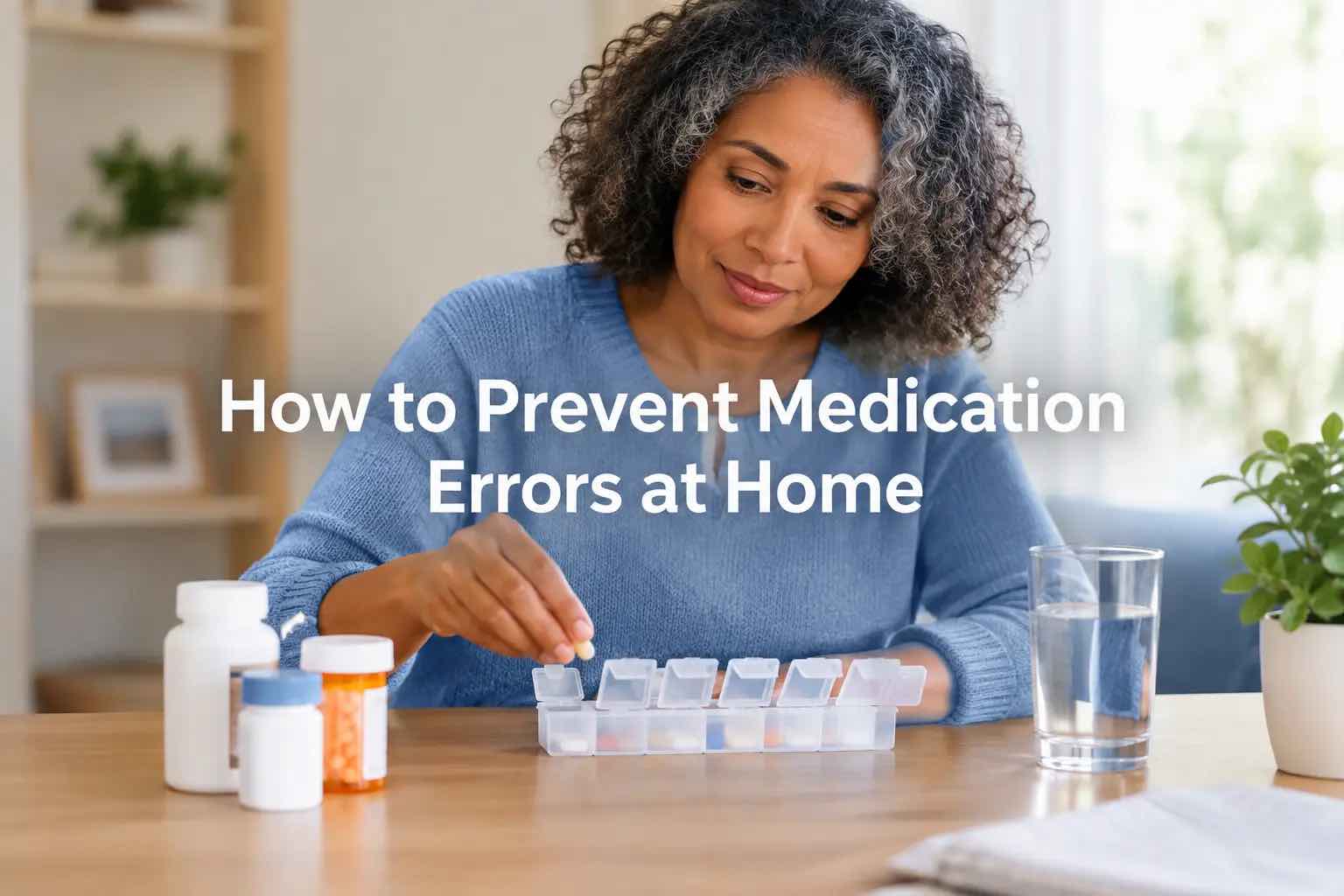
For medicines taken at regular times, a labeled pill organizer may help. Fill it in a well-lit area, with one prescription bottle open at a time, and compare each compartment with the label before putting bottles away. If a caregiver fills the organizer, another person can verify it when the regimen is complex.
Medication reminder apps, phone alarms, smart dispensers, and calendar alerts can be useful, but they are not interchangeable. An alarm may remind someone to take a dose, while a locked dispenser may be more appropriate for a person with memory changes or a medication that carries a high risk if taken twice. Technology helps most when it fits the person’s routine and does not create new confusion.
Keep medications in their original labeled containers unless a pharmacist or clinician recommends another arrangement. Store them away from children, pets, heat, and moisture. The bathroom medicine cabinet is not always ideal because humidity can affect some products.
Pay extra attention during high-risk moments
Certain situations create more opportunities for error. Slowing down at these points can prevent a small misunderstanding from becoming a serious event:
- After a hospital stay, surgery, or emergency department visit, review every medication with a pharmacist or primary care clinician.
- When a dose changes, remove old instructions from pill organizers, reminder apps, and written notes.
- When a child, older adult, or person with kidney or liver disease is prescribed a medicine, confirm that the dose is tailored to them.
- When starting a medication with similar-looking or similar-sounding names, ask the pharmacist to show you the product and explain its purpose.
- When using insulin, blood thinners, opioids, seizure medicines, or other high-alert medications, clarify exactly what to do after a missed dose before one occurs.
Older adults may face added risks because multiple conditions can lead to multiple prescribers and pharmacies. For caregivers, the goal is not to take control away from the patient. It is to create a shared process that protects independence while ensuring someone can spot changes, side effects, or gaps in refills.
Speak up about prescriptions that do not make sense
Patients and caregivers are a final safety check, not a substitute for clinical oversight. If a pill looks different from the last refill, ask why before taking it. A change may be normal because the pharmacy used a different manufacturer, but it should be confirmed.
The same applies when instructions conflict with what you remember hearing in the exam room. Call the pharmacy or prescribing office. Pharmacists are especially well positioned to explain dosing, check interactions, and identify whether two products contain the same active ingredient.
Tell clinicians about side effects rather than quietly stopping a medication, unless you are having signs of a severe allergic reaction or another emergency. Stopping some medicines abruptly can cause withdrawal symptoms or worsen the underlying condition. A prescriber may adjust the dose, switch medications, or provide a safer way to taper.
What providers and health systems can do differently
Medication safety is a shared responsibility, and many errors reflect system design rather than an individual patient’s attention. Providers can reduce risk by using plain-language instructions, asking patients to repeat back key directions, and avoiding unsafe abbreviations in prescribing.
Electronic prescribing and clinical decision support can flag allergies, interactions, duplicate therapies, and unusual doses. These tools are helpful, but alerts that fire too often may be ignored. Health systems need to prioritize the warnings most likely to signal real harm.
Clear handoffs matter just as much. When a patient leaves the hospital, discharge instructions should explain which medications are new, which have changed, which should stop, and who will follow up. That information should reach the patient, caregiver, primary care team, and pharmacy in a usable form.
Know when to get urgent help
Call emergency services right away for trouble breathing, swelling of the face or throat, loss of consciousness, a seizure, severe confusion, chest pain, or a suspected overdose. For a possible poisoning or an accidental extra dose, contact Poison Control at 1-800-222-1222 in the United States for immediate expert guidance. Do not wait for symptoms to become severe.
Medication safety is built in ordinary moments: pausing to read a label, bringing an updated list to an appointment, and asking one more question when directions are unclear. Those small safeguards give patients, caregivers, and care teams a better chance to catch an error before it reaches the person taking the medicine.
Thank you, You will be automatically subscribed to the our newsletter.