
A breakfast bar on the commute, packaged macaroni between meetings, and a late-night bowl of flavored cereal can feel like ordinary choices. But the ultra processed foods health effects conversation has moved far beyond nutrition labels and willpower. It now touches chronic disease prevention, food policy, clinical counseling, grocery access, and the way Americans eat when time and money are tight.
The central message is not that every packaged food is harmful or that people should aim for a perfect diet. Research does suggest that diets high in ultra-processed foods are associated with worse health outcomes. The harder question is what that association means for an individual, and what patients, clinicians, employers, and policymakers can realistically do with the evidence.
What counts as ultra-processed food?
“Ultra-processed” does not simply mean food that comes in a package. Canned beans, frozen vegetables, plain yogurt, whole-grain bread, and pasteurized milk are processed to some degree, often in ways that improve safety, affordability, or shelf life.
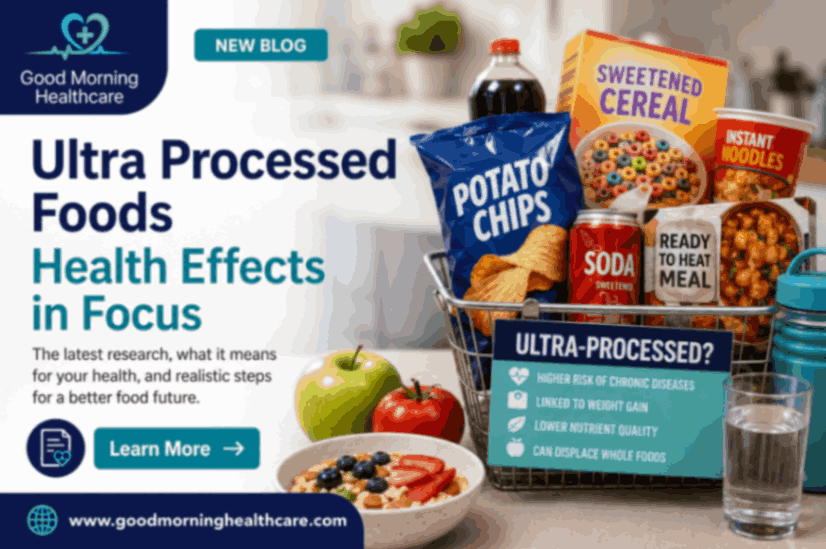
The term usually refers to industrial formulations made largely from refined ingredients, extracted fats, starches, added sugars, salt, and cosmetic additives designed to alter flavor, texture, color, or stability. Common examples include sugary drinks, many snack foods, instant noodles, packaged desserts, some ready-to-heat meals, processed meats, and sweetened breakfast cereals.
Researchers frequently use the NOVA food classification system to identify these foods. It is useful for population research, but it is not perfect. A food’s classification does not automatically reveal its nutritional quality, portion size, or role in someone’s overall eating pattern.
Ultra processed foods health effects: What research shows
Large observational studies have repeatedly found that people who consume more ultra-processed foods tend to have higher rates of obesity, type 2 diabetes, cardiovascular disease, depression, some cancers, and earlier death.
These studies cannot prove that ultra-processed foods alone caused those outcomes. Still, the pattern has drawn serious attention because it appears across different countries and populations. It also aligns with a small but influential controlled feeding study in which participants ate more calories and gained weight during an ultra-processed diet than during a minimally processed diet matched for calories, sugar, fat, fiber, and macronutrients.
For consumers, the strongest takeaway is more straightforward: a diet built mainly around highly engineered, ready-to-eat products may make it harder to maintain a satisfying, nutrient-dense pattern over time.
Why the evidence needs careful interpretation
A fortified whole-grain cereal and a frosted pastry may both be classified as ultra-processed, yet their fiber, added sugar, and nutritional contribution differ substantially. A packaged meal with vegetables, beans, and moderate sodium may be a better option than skipping dinner or relying on fast food.
Risk also depends on dose. Eating a frozen pizza occasionally is different from getting most daily calories from soda, chips, candy, cured meats, and packaged meals. Nutrition research consistently supports looking at dietary patterns rather than treating one food as a diagnosis.
There is an equity issue as well. Ultra-processed foods are often inexpensive, widely available, heavily marketed, and easy to store and prepare. For shift workers, caregivers, people with limited kitchen equipment, and households facing food insecurity, convenience is not a character flaw.
A realistic way to reduce reliance on ultra-processed foods
Start by looking at the foods that appear most often, not the foods eaten on special occasions. Replacing a daily sugary drink with water, unsweetened tea, or sparkling water can make a meaningful difference. Switching one snack from chips or candy to fruit, nuts, yogurt, or popcorn may be manageable. Adding canned beans, frozen vegetables, eggs, rotisserie chicken, or plain oats can make quick meals more substantial.
A useful shopping question is: What could I combine quickly to make a meal? Bagged salad plus beans, frozen vegetables plus brown rice and eggs, or whole-grain toast with peanut butter and fruit can be more realistic than a plan that assumes daily scratch cooking.
People taking GLP-1 medications for diabetes or weight management may face an additional consideration. Smaller appetites can make food quality more consequential. Medication decisions and individualized nutrition needs should be discussed with a clinician or registered dietitian.
What healthcare organizations and policymakers should watch
For government and public-health leaders, the policy debate includes front-of-package labeling, marketing to children, school meal standards, nutrition assistance benefits, and food industry reformulation. Each approach involves trade-offs. Labels can improve transparency but do not guarantee affordability. Reformulation can reduce sodium or added sugar, but it does not necessarily address the overall reliance on highly engineered foods. Effective policy is likely to require several coordinated measures rather than one headline-grabbing fix.
Read labels without letting labels run your life
Ingredient lists and Nutrition Facts panels can help, particularly when comparing similar products. Check added sugars, sodium, fiber, and protein, and consider whether the food resembles ingredients you would use at home. But labels cannot fully capture the context of a meal or a person’s needs.
A packaged soup can be a practical lunch. A protein bar may prevent an afternoon energy crash. A frozen entrée can keep dinner from becoming takeout.
Food choices work best when they are built around what a person can repeat. One more home-style meal, one less sugary drink, and one dependable convenience option with more fiber or protein can be a credible start. The goal is not purity at the grocery store. It is a food environment, at home and across the healthcare system, that makes the healthier choice easier to sustain.
Thank you, You will be automatically subscribed to the our newsletter.