
Key Takeaways
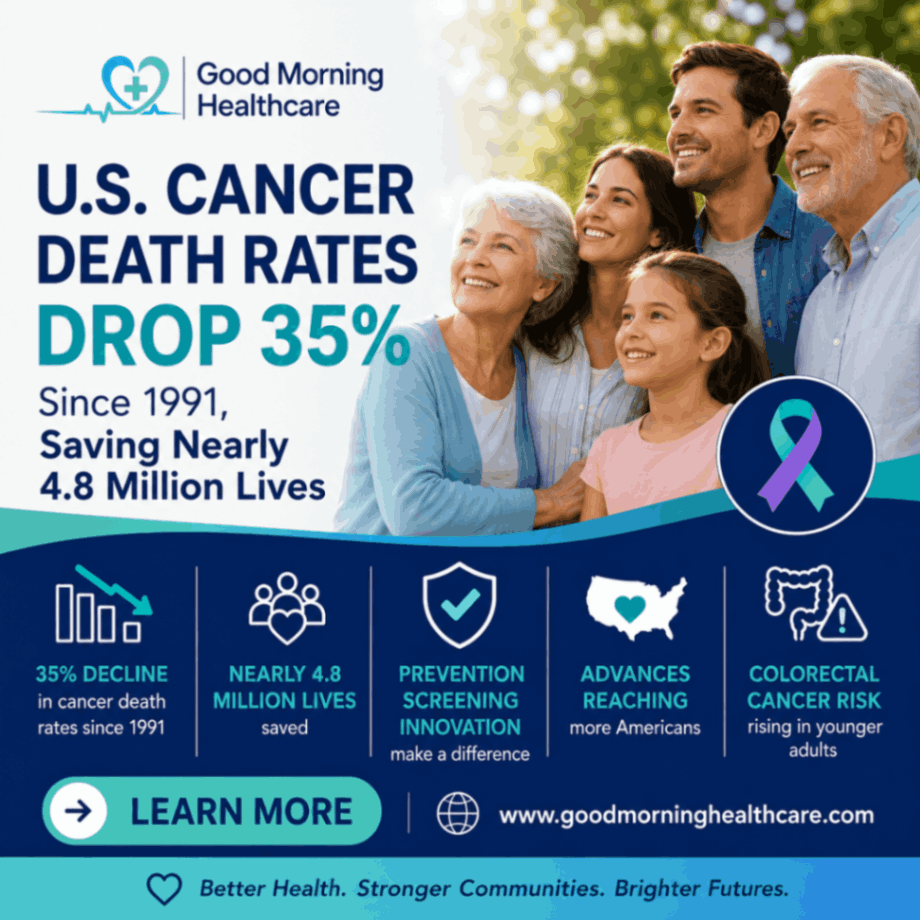
- A 35% reduction in cancer death rates since 1991 represents one of the greatest medical achievements of our time.
- Nearly 4.8 million deaths have been prevented, proving that prevention, early screening, and innovation work.
- The goal is to make sure these life-saving advances reach every American.
- One troubling trend is the rise in colorectal cancer among younger adults.
Millions of Lives Saved Through Prevention, Screening, and Innovation
For many years, cancer has been a diagnosis that struck fear in the hearts of Americans. Today, there is encouraging news worth celebrating. Since reaching a peak in 1991, the U.S. cancer death rate has fallen by about 35% with nearly 4.8 million lives saved that might otherwise have been lost. It’s one of the greatest public health success stories of our time.
This progress didn’t happen overnight. It is a result of years of efforts to reduce smoking, improve cancer screening, detect cancers earlier, and develop more effective treatments. Together, these advances have helped millions of people live longer and healthier lives.
However, not everyone has benefited equally. Many Americans do not have the opportunity to have quality treatment or early detection. As a result, cancer outcomes can vary based on race, income and where people live. Closing those gaps is the next important step in the fight against cancer.
What’s Driving the Decline?
1. Fewer Americans Are Smoking
One of the biggest reasons cancer deaths have declined is that fewer Americans smoke today. Since lung cancer remains the nation’s leading cause of cancer death, reducing tobacco use has had a tremendous impact. As smoking rates have fallen, so have new lung cancer cases and deaths. Public health experts continue to credit tobacco control as one of the greatest victories in the fight against cancer.
2. Earlier Detection Saves Lives
When cancer is found early, treatment is often more successful. That’s why routine screenings have become such an important part of preventive healthcare.
Mammograms, colonoscopies, low-dose CT scans for people at high risk of lung cancer, and newer diagnostic tools are helping doctors detect many cancers in the very early stages.
Earlier diagnosis has improved survival for several common cancers, including breast, colorectal, and lung cancer, and screening recommendations continue to adapt to new advances in research.
3. More Effective Treatments
Cancer treatment has improved in recent decades. Today’s patients have access to therapies that could not be imagined a generation ago.
Targeted drugs and therapies, improved surgical techniques, and more advanced radiation treatments are helping many people live longer and with a better quality of life. As a result, the five-year survival rate for all cancers combined has climbed to about 70%, up from roughly 50% in the mid-1970’s.
Encouraging News for Younger Americans
A recent study found that cancer mortality among Americans under age 50 declined by 44% between 1990 and 2023. Deaths from breast cancer, lung cancer, brain cancer, and leukemia all dropped significantly during that time.
These numbers show that advances in prevention, screening, and treatment are benefiting younger generations as well.
However, there is one concerning exception.
The Rising Threat of Colorectal Cancer
While most major cancers are becoming less deadly among younger adults, colorectal cancer is increasing according to the American Cancer Society.
Researchers have found that deaths from colorectal cancer in people under age 50 have been rising by about 1.1% each year since 2005. Today, it has become the leading cause of cancer-related death in younger adults in the United States.
Scientists are still working to understand what is driving this increase. Possible factors include shifts in diet, higher rates of obesity, environmental exposures, changes in the gut microbiome, and broader lifestyle factors. No single explanation has been identified, but the trend is clear enough to raise concern.
It is important to pay attention to early warning signs and not dismiss persistent digestive symptoms, even at younger ages.
In response to this shift, the American Cancer Society now recommends that adults at average risk begin colorectal cancer screening at age 45.
Progress in Closing Racial Gaps
Another encouraging trend is that the gap in cancer death rates between Black and White Americans is getting smaller. A report by the American Association for Cancer Research (AACR) confirms that the racial disparity in cancer death rates between Black and white Americans has fallen from 34% higher in 1991 to 9% in 2024. While differences still exist, that gap has narrowed considerably due to improved access to care, expanded screening programs, and advances in treatment.
The Urban–Rural Cancer Gap Is Becoming Harder to Ignore
One of the most concerning trends in cancer outcomes is the growing difference between urban and rural America according to new data released this month.
Large cities have benefited from faster access to medical advances, such as, expanded screening programs, specialized cancer centers, and newer, more effective treatments. In many cases, patients in urban areas can be diagnosed earlier and start treatment sooner.
Rural communities, however, often face very different realities. Many areas have fewer healthcare providers, longer travel times to reach care, lower average incomes, and more limited access to preventive screenings.
Although overall, cancer mortality has declined in the US, rural counties have seen only small improvements, and in some cases, cancer death rates have continued to rise.
The truth is that where you live and what resources are available to you still plays a major role in cancer outcomes.
What This Means for Patients and Families
To keep moving forward and to make sure those gains reach everyone—health experts continue to emphasize several priorities:
- Expanding access to cancer screening
- Reducing tobacco use
- Addressing healthcare shortages in rural communities
- Closing racial and socioeconomic gaps in outcomes
- Raising awareness about rising colorectal cancer risk in younger adults
- Continuing strong investment in cancer research and innovation
The overall story of cancer in America is increasingly one of progress and hope. The challenge now is to ensure that progress is shared as equally as possible so that every community can benefit from the advances that are saving lives.
Be Informed
See the American Cancer Society guidelines for early screening and detection here.
Click here for cancer causes and prevention tips from the National Cancer Institute.
Recommended Internal & External Links
Internal Links (Good Morning Healthcare)
- Cancer screening and prevention articles
- Preventive healthcare resources
- Healthy lifestyle and smoking cessation content
- Rural healthcare access articles
External Resources
- American Cancer Society Cancer Statistics Center
- National Cancer Institute Cancer Prevention Resources
Thank you, You will be automatically subscribed to the our newsletter.