
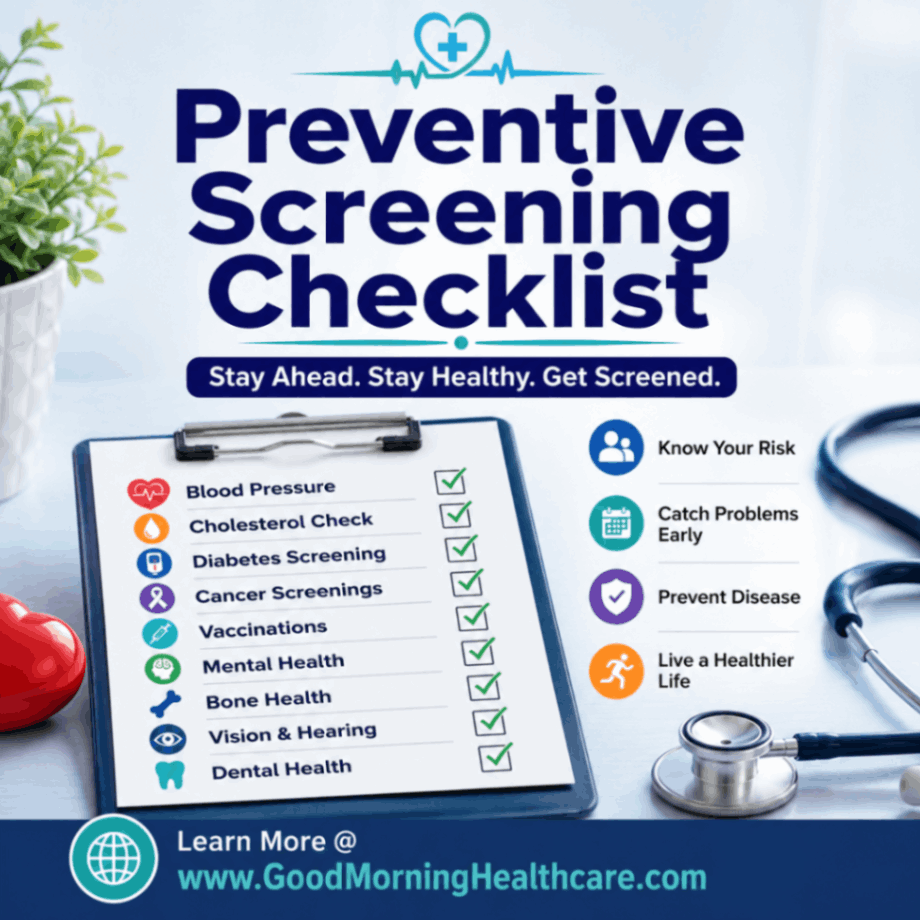
A preventive screening checklist is not a list of medical tests you need to complete all at once. It is a practical way to make sure important preventive care does not get pushed aside by work, caregiving, prescription refills, or the assumption that feeling healthy means everything is fine.
The right screening plan depends on your age, sex assigned at birth when relevant to a recommendation, personal and family history, medications, lifestyle, risk factors, and previous test results. Your primary care clinician can help turn those details into a personalized plan using guidance from the U.S. Preventive Services Task Force (USPSTF), the Centers for Disease Control and Prevention (CDC), and other medical organizations.
Important: Screening is intended for people without symptoms. New chest pain, unexplained bleeding, a new lump, persistent changes in bowel habits, sudden shortness of breath, or another concerning symptom may require diagnostic evaluation rather than waiting for routine screening.
Preventive Screening Checklist for Adults
A good preventive care checklist goes beyond cancer screening. It should include cardiovascular risk, diabetes, vaccinations, mental health, substance use, bone health, vision, hearing, dental care, and medication review.
Blood pressure
Blood pressure screening is one of the simplest and most important preventive health checks. The USPSTF recommends screening adults age 18 and older for hypertension. When blood pressure is elevated, measurements outside the doctor’s office—such as validated home monitoring or ambulatory monitoring—can help confirm a diagnosis.
High blood pressure often has no obvious symptoms but increases the risk of heart disease, stroke, and kidney disease.
Cholesterol and cardiovascular risk
A cholesterol test is only one part of cardiovascular risk assessment. Your clinician may consider LDL cholesterol, HDL cholesterol, triglycerides, blood pressure, diabetes, smoking, age, family history, and other factors when deciding whether lifestyle changes or medications such as statins may be appropriate.
The goal is not simply to determine whether one cholesterol number is “good” or “bad.” It is to understand your overall cardiovascular risk.
Diabetes screening
The USPSTF recommends screening adults ages 35 to 70 who have overweight or obesity for prediabetes and type 2 diabetes. Screening can involve an A1C blood test, fasting glucose, or oral glucose tolerance test.
Earlier or more frequent testing may be appropriate for people with additional risk factors, including a strong family history or a history of gestational diabetes.
Weight, nutrition, exercise and sleep
Preventive care should also include conversations about weight, nutrition, physical activity, and sleep.
These factors influence the risk of diabetes, cardiovascular disease, sleep apnea, some cancers, and other chronic conditions.
Our guide to ultra-processed foods and what you need to know offers a closer look at one important part of everyday nutrition.
Mental health, alcohol and tobacco use
Preventive visits provide an opportunity to discuss depression, anxiety, alcohol use, tobacco, nicotine, and other substance use before they become major health problems.
These conversations can also uncover medication interactions and lifestyle factors that may be affecting sleep, blood pressure, weight, or chronic disease.
Read more about the changing conversation around mental health in our article on the mental health crisis and new perspectives.
Vaccinations
Vaccines remain an important part of preventive care throughout adulthood. Depending on age, health conditions, previous vaccinations, pregnancy status, and other factors, adults may need vaccines such as influenza, COVID-19, shingles, pneumococcal, hepatitis B, RSV, and tetanus-containing vaccines.
Because recommendations can change, check the current CDC adult immunization schedule rather than relying on an old vaccination record or an outdated checklist.
Cancer Screening: Age Is Only the Starting Point
Cancer screening is often the most familiar part of preventive care, but age alone does not determine when you should be screened.
Family history, previous abnormal tests, genetic risk, smoking history, inflammatory bowel disease, previous cancer, and other medical factors can change the recommended schedule.
Breast cancer screening
The USPSTF recommends that women at average risk begin mammography every other year at age 40 and continue through age 74.
People with a strong family history, known genetic mutations, or other elevated risks may need a different screening strategy.
Our women’s cancer screening cheat sheet can serve as a quick reference.
Cervical cancer screening
People with a cervix generally need cervical cancer screening between ages 21 and 65, although the appropriate test and interval depend on age, previous results, and medical history.
Screening may involve a Pap test, HPV testing, or both. HPV vaccination is also an important part of cervical cancer prevention.
Colorectal cancer screening
For average-risk adults, the USPSTF recommends colorectal cancer screening beginning at age 45. Screening is recommended through age 75, with individualized decisions for many adults ages 76 to 85.
Options include:
- Annual stool-based FIT testing
- Stool DNA-FIT testing at recommended intervals
- Colonoscopy, generally every 10 years when appropriate
- Other visualization-based screening options
One important point: a positive stool-based screening test requires follow-up colonoscopy.
Lung cancer screening
Annual low-dose CT screening is recommended for adults ages 50 to 80 who have at least a 20 pack-year smoking history and currently smoke or quit within the past 15 years. Screening generally stops once someone has been smoke-free for 15 years or develops a health problem that substantially limits life expectancy or the ability to undergo curative treatment.
A pack-year is calculated by multiplying the number of packs smoked per day by the number of years smoked.
Prostate cancer screening
PSA testing is not a universal screening test for every man.
The USPSTF recommends an individual decision for men ages 55 to 69 after discussing potential benefits and harms with a clinician. Family history and being Black are among factors that can increase prostate cancer risk and may influence when the conversation begins. Routine PSA screening is not recommended for men age 70 and older by the USPSTF.
PSA testing can detect cancer earlier, but it can also produce false-positive results and lead to biopsies or treatment for cancers that might never have caused symptoms.
Other Preventive Screenings to Discuss
HIV and hepatitis C
Preventive care can include screening for infections even when you feel completely healthy.
The USPSTF recommends HIV screening for adolescents and adults ages 15 to 65, with testing outside that age range when risk factors are present.
The USPSTF also recommends hepatitis C screening for adults ages 18 to 79.
Bone density and osteoporosis
The USPSTF recommends osteoporosis screening for women age 65 and older and for younger postmenopausal women whose fracture risk is elevated. Evidence is currently insufficient for a universal osteoporosis screening recommendation in men, although individual risk factors may warrant evaluation.
Risk factors can include low body weight, smoking, certain medications, previous fractures, and other medical conditions.
Vision, hearing and dental care
Vision, hearing, and dental health are sometimes overlooked because they do not fit neatly into a single age-based screening schedule.
Yet untreated hearing loss can affect communication and social connection, while poor vision and dental problems can affect safety, nutrition, and quality of life.
Ask your clinician and dental or eye-care professional how often you need these services based on your age and individual risk.
Your Family History Can Change Your Screening Plan
“Heart disease runs in my family” or “cancer runs in my family” is useful information—but more detail can make it much more valuable.
When possible, tell your clinician:
- Which relative had the condition
- What type of cancer or disease they had
- Their age when diagnosed
- Whether multiple close relatives were affected
- Whether the condition occurred on your mother’s or father’s side
A history of breast, ovarian, pancreatic, prostate, colorectal, uterine, or melanoma cancers may be particularly important when several close relatives are affected or diagnoses occurred at younger ages.
Family history of early heart disease, stroke, very high cholesterol, diabetes, osteoporosis, dementia, or inherited disorders can also influence preventive care.
Don’t Try to Do Everything at Once
A preventive screening checklist should make healthcare easier—not more overwhelming.
At your next primary care visit, ask:
- Which screenings am I due for now?
- Which ones are most important based on my personal risk?
- Are any tests unnecessary because of my age or medical history?
- Which tests can be done at home?
- What preparation is required?
- When should I repeat each test?
- What happens if a screening test is abnormal?
- Will follow-up testing be considered diagnostic rather than preventive care?
That last question can matter financially. A preventive screening service may be covered differently from follow-up care after an abnormal result. Check your health plan’s rules before scheduling a procedure if cost is a concern.
The Bottom Line
The best preventive screening checklist for adults is not the longest one. It is the one that matches your age, health history, family history, risk factors, medications, and preferences.
Keep a simple record of your screening dates, results, vaccinations, and next due dates. Your patient portal can help, but records may be incomplete when you have seen different health systems, specialists, pharmacies, or clinics.
Most importantly, don’t treat preventive screening as a race to complete every available test. The goal is to identify meaningful risks early, prevent disease when possible, and make sure the care you receive is appropriate for you.
This article is for general education and does not replace individualized medical advice. Screening recommendations can change, and your clinician should determine which tests are appropriate for you.
Trusted Resources
- U.S. Preventive Services Task Force — evidence-based recommendations for preventive screening.
- CDC Adult Immunization Schedule — current adult vaccination guidance.
- CDC Preventive Health — information on prevention, vaccines, and major health conditions.
Thank you, You will be automatically subscribed to the our newsletter.