
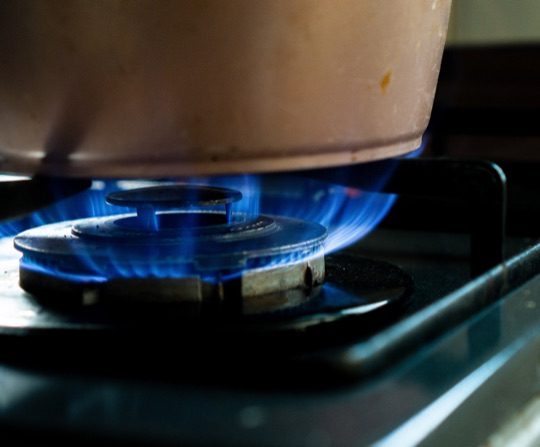
Gas stoves have been a favorite of both home cooks and professional chefs for decades. However, recent research shows that gas flames affect indoor air quality and are a growing concern for our health. Since Americans can spend up to 90% of their time indoors, according to the Environmental Protection Agency (EPA,) this is an important issue.
Key Points
- Gas stoves in the home can release unhealthy gases, such as nitrogen dioxide, at high levels within a few minutes. Sometimes, these levels were more than double the EPA’s standard for outdoor air. Currently, the EPA has no set limits for indoor air.
- These gases can be a problem for those with asthma or other lung diseases, especially children. In fact, children living in households that cook with gas stoves are 42% more likely to have asthma.
- Good ventilation is crucial when cooking with a gas stove. Air purifiers can also help.
The Big Picture
Nitrogen Oxides (NOx) mainly come from emissions from vehicles or power plants and contribute to the haze known as smog. Studies now suggest that gas ranges emit the same type of gases, especially nitrogen dioxide. These gases have more “acute toxicity” which means powerful effects even during short exposure times, such as cooking a meal.
Kitchen Science
Consumer Reports recently measured emissions of NOx and other gases from typical gas ranges in settings similar to cooking in a typical kitchen.
Their tests found levels of nitrogen dioxide higher than public health organization recommendations, such as the World Health Organization. These levels increased even more when there was no ventilation and when the burners were set on high.
“You would never drag your gas grill into your kitchen to make dinner,” says James Dickerson, PhD, CR’s chief scientific officer, “but in effect, cooking with a gas stove comes with some of those same risks.”
Gas stoves leak even when not being used, according to a recent study conducted by Stanford University.
Things to Do Right Now
- Use your range hood every time you cook.
- Install a hood, directly over your stove, if possible, to be most effective.
- Open windows and use fans if no other ventilation is available. This will help disperse the gases.
- Use air purifiers with HEPA and carbon filters.
- Keep plants near the kitchen to help clean the air.
According to a 2014 US government study using HEPA and carbon filters or replacing an unvented stove with electric are the best ways to decrease nitrogen dioxide in the home.
For more information, check out the following:
How to Protect Yourself from Indoor Air Pollution and Other Hidden Home Hazards
20 Products to Improve Your Home’s Indoor Air Quality
Gas Stoves: Health and Air Quality Impacts and Solutions
Photo by KWON JUNHO on Unsplash
What you’ve written here is an invitation — to pause, reflect, and appreciate the deeper currents beneath the surface.
It’s always so sweet and also full of a lot of fun for me personally and my office colleagues to search your blog a minimum of thrice in a week to see the new guidance you have got.
Hey very nice web site!! Man .. Excellent .. Amazing .. I’ll bookmark your I’m happy to find so many useful information here in the post, we need develop more techniques in this regard, thanks for sharing. . . . . .
Howdy! I simply wish to give an enormous thumbs up for the great information you’ve got here on this post. I will probably be coming again to your weblog for extra soon.
Thank
I really like reading through an article that can make people think. Also, many thanks for permitting me to comment!
Why is this suddenly a bad news when western society has been using indoor gas stove for over 85 years? Glad there is focus on this now.
Great Article. In western countries, when there is little open ventilation at home, Gas Stove toxicity can be greater than other countries.