
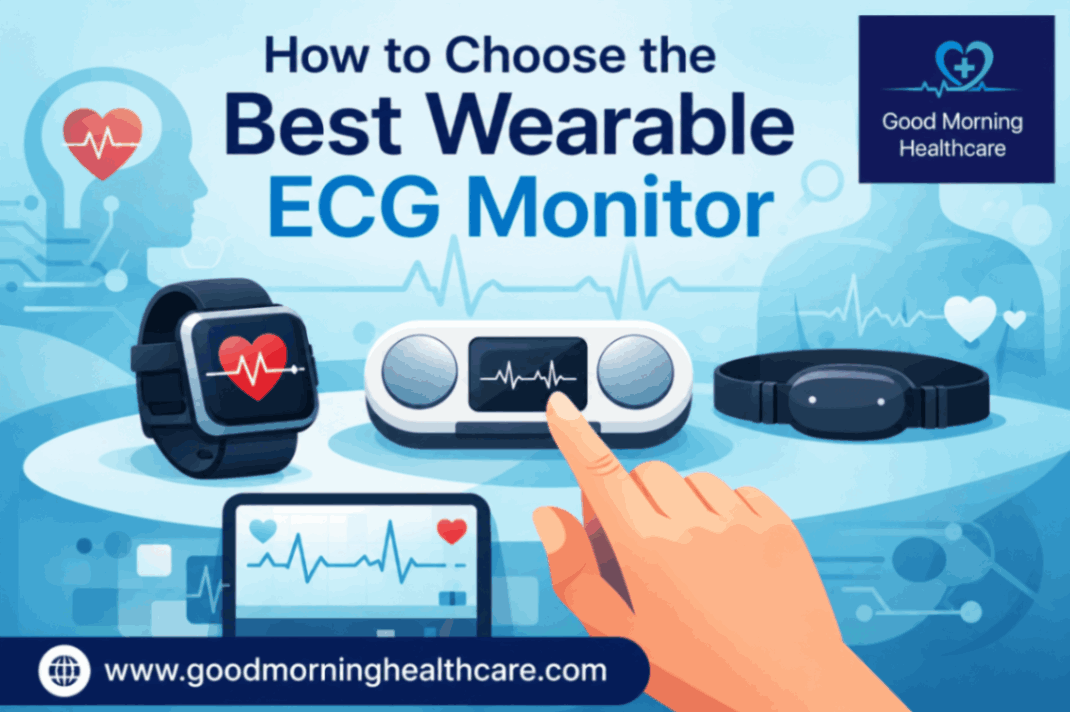
A smartwatch tracing can look reassuringly clinical: a line on a screen, a heart-rate number, a notification that says rhythm is normal or irregular. But the best wearable ECG monitor is not necessarily the one with the most health features or the most polished app. It is the device that can capture a useful reading when it matters, fits the question you and your clinician are trying to answer, and does not create more anxiety than clarity.
For people with palpitations, a history of atrial fibrillation, or an interest in heart health, wearable ECGs have moved from novelty to a meaningful part of consumer digital health. They can document brief symptoms that are difficult to catch during a routine office visit. They also come with limitations: most are not designed to diagnose chest pain, rule out a heart attack, or replace clinical cardiac monitoring.
What a wearable ECG can actually measure
An electrocardiogram records the heart’s electrical activity. A conventional ECG performed in a clinic often uses 12 leads placed across the chest and limbs, giving clinicians multiple views of the heart’s electrical signals. Most consumer wearables produce a single-lead ECG, typically when the user touches a sensor while wearing the device.
That distinction matters. A single-lead tracing may help identify patterns consistent with atrial fibrillation, a common irregular rhythm associated with a higher stroke risk. It may also show a normal sinus rhythm, a high or low heart rate, or an unreadable result caused by motion, poor skin contact, or other factors. It cannot provide the same information as a 12-lead ECG, and a “normal” wearable result does not explain every episode of dizziness, shortness of breath, or chest discomfort.
Some devices also use optical sensors for continuous pulse tracking and irregular-rhythm notifications. These features are related to ECG monitoring but are not the same test. Optical alerts can flag a possible issue; an on-demand ECG can provide a more specific rhythm strip to review.
Best wearable ECG monitor: start with your use case
There is no single best wearable ECG monitor for every reader. The right choice depends on whether you need an occasional symptom recording, ongoing passive notifications, a device that blends into daily life, or a clinician-prescribed monitor with continuous multi-day data.
For an adult who occasionally feels a racing or fluttering heartbeat, a watch-based ECG may be practical because it is already on the wrist when symptoms occur. The ability to record a tracing in roughly 30 seconds and export it for a care team can be valuable. Apple Watch, Samsung Galaxy Watch, Fitbit devices with ECG capability, and Withings ScanWatch models are among the consumer products that have offered ECG features in the United States, though availability and supported features vary by model, phone, software version, age, and region.
For someone with symptoms that happen infrequently or without warning, a consumer watch may not be enough. A clinician may recommend a Holter monitor, patch monitor, event monitor, or implantable loop recorder. These tools can capture more continuous information and are interpreted within a clinical workflow. They are less convenient, but they answer different questions.
FDA status is a useful filter, not a guarantee
In the United States, many consumer ECG features are FDA-cleared, meaning the manufacturer has met the applicable pathway for that device and intended use. “FDA approved” is often used casually in marketing and conversation, but it is not interchangeable with cleared, authorized, or registered.
More important than the label alone is the intended use. Read what the product says it can detect and who it is designed for. Some ECG apps are intended to identify signs of atrial fibrillation in adults within a stated heart-rate range. They may not be designed for people with known arrhythmias other than AFib, for children, or for use with pacemakers and other implanted devices.
A device can be regulated and still return an inconclusive tracing. That does not mean it failed. Sweat, movement, a loose band, dry skin, tremor, and an elevated heart rate can all affect the recording. The practical question is whether it performs reliably enough in your normal routine to produce a shareable tracing when symptoms occur.
Features that matter more than a long spec sheet
A wearable ECG is easiest to use when recording a symptom takes little effort. The device should be comfortable enough to wear consistently, easy to charge, and simple to operate without opening several app screens. If you are shopping for an older parent or a patient who is not comfortable with technology, the setup experience and caregiver access may matter as much as the sensor itself.
Consider whether the device lets you label symptoms such as palpitations, fatigue, dizziness, or skipped beats at the time of recording. Context helps clinicians interpret a rhythm strip. A PDF export or other straightforward way to share results can also reduce friction at an appointment.
Subscription costs can also change the equation. Some wearables include ECG functionality with the device, while certain trend reports, advanced sleep metrics, or longer-term data views may sit behind a monthly membership. Assess the total cost over a year, not just the purchase price.
Privacy is another part of the decision. Consumer health data may flow through a manufacturer’s app, cloud account, connected phone, and third-party integrations. Review how ECG reports are stored, whether they can be deleted, who can access them, and how data sharing works before building the device into a care routine.
Accuracy is not the same as a diagnosis
Wearable companies often cite validation studies, sensitivity, and specificity. Those measurements are useful, but they can be misunderstood. Results from a controlled study do not guarantee that every real-world recording will be interpretable, particularly when the person is moving or symptomatic.
False positives deserve attention because an irregular-rhythm alert can lead to worry, additional testing, and care utilization. False negatives matter too, especially when people treat a normal-looking watch result as permission to ignore concerning symptoms. The appropriate response to a notification is usually to save the tracing, note what you were feeling, and follow the guidance from your clinician.
Seek urgent care or call 911 for chest pain or pressure, fainting, severe shortness of breath, new weakness or trouble speaking, or other signs of a medical emergency. Do not wait for a wearable to generate a clean reading. A consumer ECG is a documentation tool, not an emergency triage system.
How clinicians and health systems can use the data
For providers, patient-generated ECG data can be helpful when it is targeted and interpretable. A tracing recorded during a familiar episode may shorten the path to an appropriate referral or formal ambulatory monitor. It can also support shared decision-making for patients managing known AFib or tracking symptoms after a medication change.
The operational challenge is volume. Health systems need clear policies on where patients send readings, who reviews them, what turnaround time is reasonable, and when an alert should prompt escalation. An inbox full of unlabeled smartwatch screenshots is not a remote-monitoring program.
Payers and digital-health leaders face a related evidence question: does use of a consumer wearable improve diagnosis, adherence, outcomes, or total cost for a defined population? The answer may differ for people with established cardiovascular risk, those with unexplained symptoms, and low-risk consumers using a device for general wellness. More data is not automatically better care.
Questions to ask before you buy
Ask your primary care clinician or cardiologist whether a consumer ECG is likely to help with your specific symptoms. If you already have a diagnosis, ask which readings are useful to capture and how your care team prefers to receive them. Also ask whether your medications, implanted device, age, or medical history affects which products are appropriate.
Then compare the practical basics: compatibility with your phone, wrist comfort, charging habits, cost, ECG report sharing, notification settings, and the device’s stated intended use. If a device is likely to sit in a drawer after two weeks, its clinical promise will not matter much.
The most useful wearable ECG is often the one that helps you notice a meaningful pattern, record it clearly, and bring that information into a real conversation with a clinician. That is a modest role, but for the right person, it can make the next care decision more informed.
Thank you, You will be automatically subscribed to the our newsletter.