
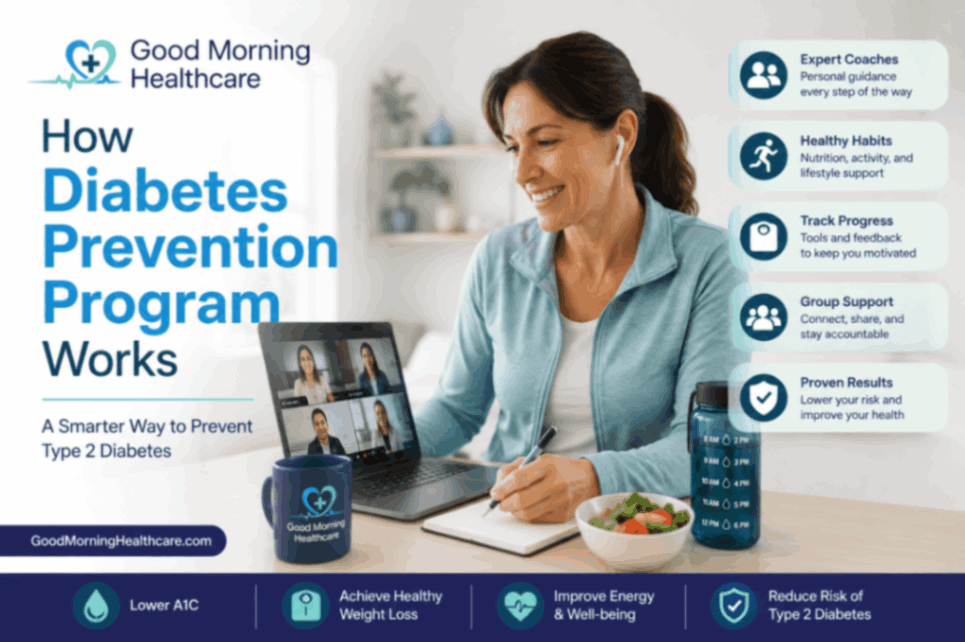
A borderline A1C result often raises an important question: Can I prevent type 2 diabetes before it starts? For millions of Americans with prediabetes, the answer may be yes.
An online diabetes prevention program combines evidence-based nutrition guidance, physical activity coaching, weight management, and behavior-change support into a structured program that participants can complete from home. Unlike general wellness apps, many programs follow the CDC’s National Diabetes Prevention Program and are designed specifically for people at increased risk of developing type 2 diabetes.
As employers, health plans, Medicare, and healthcare organizations expand virtual prevention programs, understanding what makes one program effective—and how to choose one—has become increasingly important.
Key Takeaways
- More than 98 million U.S. adults have prediabetes, and over 80% don’t know they have it
- Online diabetes prevention programs help people with prediabetes reduce their risk of type 2 diabetes.
- CDC-recognized programs include lifestyle coaching, nutrition education, physical activity goals, and long-term support.
- Losing just 5–7% of body weight can significantly reduce diabetes risk for many adults.
- Many employer health plans and Medicare cover eligible participants.
- The best programs focus on lasting behavior change rather than short-term dieting.
Why diabetes prevention is a pressing health issue
Prediabetes means blood sugar levels are higher than normal but not yet in the diabetes range. Many people do not know they have it because symptoms are often absent. Risk rises with factors such as a family history of type 2 diabetes, prior gestational diabetes, excess weight, physical inactivity, and increasing age, though people at any body size can develop prediabetes.
The stakes extend beyond a future diagnosis. Prediabetes is associated with a higher risk of cardiovascular disease, and type 2 diabetes can lead to kidney disease, vision loss, nerve damage, and other complications when it is not well managed. Prevention is therefore a population-health priority, not merely a personal wellness goal.
The evidence behind lifestyle intervention is unusually strong. The landmark Diabetes Prevention Program study found that intensive lifestyle changes reduced the risk of developing type 2 diabetes among high-risk adults more than metformin during the study period. The goal was practical: modest weight loss for participants who needed it, along with regular physical activity. For many people, losing about 5% to 7% of body weight can meaningfully lower risk.
What an online diabetes prevention program includes
Without intervention, many people with prediabetes develop type 2 diabetes within five years. A credible online program typically follows the framework of the National Diabetes Prevention Program, a public-health model administered by the Centers for Disease Control and Prevention. Participants generally meet in virtual groups, communicate through an app or web platform, or use a combination of live and self-paced support.
The central component is a trained lifestyle coach. The coach is not usually a physician and does not diagnose or prescribe medication. Instead, the coach helps participants set realistic goals, review progress, identify obstacles, and build accountability. Group sessions can add another layer of support by making the experience less isolating.
Programs commonly run for about a year, with more frequent sessions early on and less frequent contact later. That longer duration is deliberate. Initial motivation can help someone start, but maintenance requires practice through holidays, travel, changing work schedules, and the ordinary disruptions of life.
| DPP Feature | CDC Program | Wellness App |
|---|---|---|
| Lifestyle Coach | ✓ | Sometimes |
| Structured Curriculum | ✓ | Usually No |
| Group Support | ✓ | Rare |
| CDC Recognition | ✓ | Usually No |
| Weight Tracking | ✓ | Often |
| Insurance Coverage | Often | Rare |
| One-Year Program | ✓ | Usually Shorter |
Who may qualify
Eligibility rules differ, but many programs serve adults with prediabetes documented by an A1C, fasting glucose, or oral glucose tolerance test. Some accept people with a prior history of gestational diabetes or those identified as high risk through a screening tool. Medicare has separate requirements for its diabetes prevention benefit, and employer-sponsored or commercial-plan programs may use their own criteria.
People who already have type 1 or type 2 diabetes generally need diabetes management services rather than a prevention program. Someone who is pregnant, has an eating disorder history, takes medications that affect blood glucose, or has significant mobility limitations may need a more individualized plan. A primary care clinician can help determine what level of support makes sense.
The advantages of virtual delivery – and its limits
For many participants, the strongest case for online delivery is access. A virtual class can eliminate a long drive, fit around shift work, and make it easier for people in rural areas or communities with limited local programming to participate. It may also feel more private for someone who is hesitant to attend an in-person group.
Digital tracking can make patterns visible. A participant may notice, for example, that sleep loss is followed by less activity, or that certain workdays lead to skipped meals. Used thoughtfully, that information can lead to better planning rather than guilt.
There is also a clinical boundary. Prevention programs can support healthy behavior, but they cannot evaluate chest pain, severe depression, medication side effects, or rapidly changing blood sugar. Participants should know when to contact their clinician and when urgent care is needed.
How to assess an online diabetes prevention program
Consumers and benefit leaders should look beyond marketing claims such as “personalized” or “AI-powered.” The practical questions are more revealing: Is the program recognized by the CDC or aligned with its evidence-based standards? Are lifestyle coaches trained, and is there a clear way to contact them? Does the program have a defined curriculum and an expected schedule of meetings?
It is also worth asking how outcomes are measured. Programs should be able to describe participant retention, attendance, average weight-change results, and how they protect personal health information. Strong privacy policies matter because connected scales, meal logs, and activity data can create a detailed picture of someone’s daily life.
For employers and payors, engagement is not a minor operational metric. A low-cost program that participants abandon after two sessions is unlikely to deliver meaningful health or cost benefits. Evaluation should consider whether the vendor can reach eligible members, support people across languages and digital-literacy levels, and connect participants back to primary care when needed.
Price and coverage deserve equal attention. Some commercial health plans, Medicare arrangements, employers, and community organizations cover eligible participants, while other programs charge monthly or annual fees. Before enrolling, ask whether there is a cost for the device, a cancellation fee, or a requirement to meet participation targets. Coverage rules can change, so the most useful answer usually comes directly from the plan administrator or program operator.
Prevention in the GLP-1 era
The rapid growth of GLP-1 medications has changed the public conversation about weight and metabolic health. These medications can be clinically appropriate for some people, but they do not make lifestyle support obsolete. Medication access, side effects, costs, and long-term treatment plans all vary. For some patients, medication and structured coaching may work together; for others, a lifestyle program may be the first step.
For anyone with prediabetes or elevated risk, that ongoing structure of DPP may be more valuable than another short-lived promise to “eat better” starting Monday.
Thank you, You will be automatically subscribed to the our newsletter.