
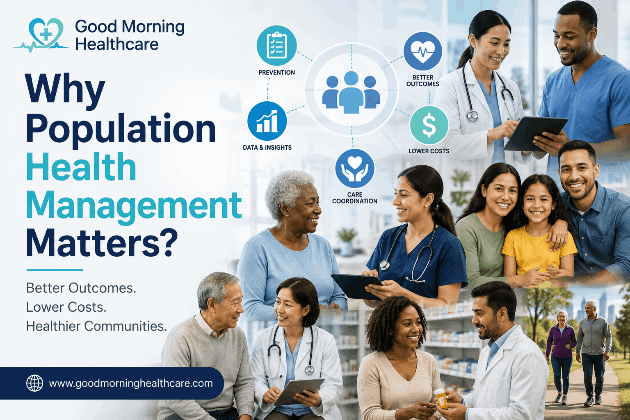
A hospital can deliver excellent care in the exam room and still see too many patients return to the emergency department, miss diabetes screenings, or struggle to afford prescriptions. That gap is where what is population health management becomes more than an industry term. It is a practical way to improve health outcomes for groups of people, rather than waiting to treat problems one patient at a time.
What Is Population Health Management?
Population health management is the organized effort to improve the health outcomes of a specific group while addressing the clinical, financial, and social factors that shape those outcomes. A population might include patients assigned to a primary care practice, members of a health plan, residents of a county, or people living with a particular condition such as heart failure.
For example, a primary care organization may use its records to identify patients with uncontrolled high blood pressure who have not had a recent visit. A care team can then reach out, schedule an appointment, review medication barriers, and connect the patient with transportation or nutrition support if needed. The work is proactive rather than waiting for a stroke, hospitalization, or emergency visit.
This is different from treating a single patient after an illness develops. Individual clinical care remains essential, but population health management looks for patterns across hundreds or thousands of people. It asks where care is falling through the cracks and which interventions can make a measurable difference.
Population Health Management at a Glance
| Feature | Description |
|---|---|
| Primary Goal | Improve health outcomes across a population |
| Focus | Prevention and early intervention |
| Uses Data From | Electronic health records, insurance claims, pharmacy records, lab results |
| Common Users | Hospitals, physicians, insurers, employers, government agencies |
| Main Benefits | Better outcomes, lower costs, improved care coordination |
| Supports | Value-based healthcare |
Population Health vs. Public Health: What’s the Difference?
The terms overlap, but they are not interchangeable. Public health generally focuses on the health of communities and the broader conditions that affect them. Vaccination campaigns, clean-water systems, tobacco-control policies, disease surveillance, and local health department programs are familiar public health activities.
Population health management usually operates closer to the care-delivery system. A provider organization or insurer may focus on its own attributed patients or members, using clinical and claims data to coordinate services. In practice, the two fields often meet. A health system trying to reduce asthma-related emergency visits may partner with schools, housing organizations, and local public health agencies because mold, air quality, and access to medications can matter as much as an office visit.
That distinction matters because no single organization controls every factor affecting health. A clinic can encourage healthy eating, but it cannot create a grocery store in a food desert on its own. Effective population health programs recognize those limits and build partnerships rather than treating social barriers as someone else’s problem.
How Population Health Management Works Step by Step
At its best, PHM turns large volumes of information into focused action. Health care organizations commonly combine electronic health record information with insurance claims, pharmacy data, lab results, and sometimes patient-reported information. That data can reveal who is overdue for preventive screenings, who may be at high risk for hospitalization, or who has not filled an important prescription.
Care teams then segment the population by need. People who are generally healthy may receive reminders for vaccines, cancer screenings, and annual wellness visits. Those with chronic conditions may receive regular monitoring and education. Patients with multiple serious conditions, recent hospital stays, or major social needs may work with nurses, pharmacists, social workers, community health workers, or care managers.
Technology can help identify priorities and track outreach, but it is not the strategy by itself. Predictive analytics may flag patients at elevated risk.
A common example: preventing avoidable readmissions
Consider a patient discharged after treatment for heart failure. Without follow-up, they may be unclear about medication changes, unable to get a refill, or unaware that rapid weight gain can signal fluid retention. A population health program can arrange a prompt follow-up visit, have a pharmacist review medications, and connect the patient to a nurse line for questions.
Why Providers, Payers, and Communities Are Paying Attention
Traditional fee-for-service health care pays clinicians and hospitals largely for each visit, test, procedure, or admission. That structure can reward volume even when more services do not produce better health. Value-based arrangements shift some financial accountability toward quality, outcomes, and total cost of care.
Population health management gives organizations the operating model to work under those arrangements. If a physician group is accountable for the quality and cost of care for a defined patient panel, it needs a way to find gaps in care before they become crises. If a Medicare Advantage plan is trying to help members manage chronic disease, it needs coordinated outreach that goes beyond processing claims.
Challenges of Population Health Management
Population health management depends on data, and health care data is often incomplete. A patient may receive care from multiple systems that do not easily share records. Claims data can arrive months after a service. Social needs data can be particularly inconsistent because patients may be reluctant to disclose sensitive circumstances.
Privacy is another nonnegotiable issue. Patients should understand how their information is used, and organizations must follow applicable privacy rules when sharing data across care teams and community partners. Better coordination should not come at the cost of treating personal health information casually.
How Organizations Measure Population Health Success
Population health management success is measured by more than reducing costs. Organizations also track improvements in chronic disease control, preventive screenings, medication adherence, hospital readmissions, emergency visits, patient experience, and health equity.
The best programs balance technology with personalized care, ensuring support reaches the people who need it most. Effective population health strategies improve outcomes by combining data, care coordination, and targeted interventions.
What Population Health Management Means for Patients
Most patients will not encounter population health management as a formal label. They may notice it as a message that a screening is due, a call after leaving the hospital, help arranging an appointment, or a referral to a food, transportation, or behavioral health resource.
Population health management works best when it does not feel like a distant system sorting people into categories. It should make care easier to understand and easier to use. When a reminder, care manager, clinician, and community resource are pulling in the same direction, prevention becomes less of an abstract goal and more of a realistic next step.
Frequently Asked Questions
What is population health management?
Population health management is a healthcare strategy that improves health outcomes for groups of people through preventive care, care coordination, data analysis, and early intervention.
Who uses population health management?
Hospitals, physician practices, health insurers, Medicare Advantage plans, employers, public health agencies, and accountable care organizations (ACOs).
What is the difference between population health and public health?
Population health focuses on improving outcomes for a defined group of patients, often within a healthcare system or insurance plan, while public health addresses the health of entire communities through policy, prevention, and environmental interventions.
Why is population health management important?
PHM helps identify health risks earlier, improves chronic disease management, reduces avoidable hospitalizations, supports value-based care, and can lower healthcare costs.
Thank you, You will be automatically subscribed to the our newsletter.