
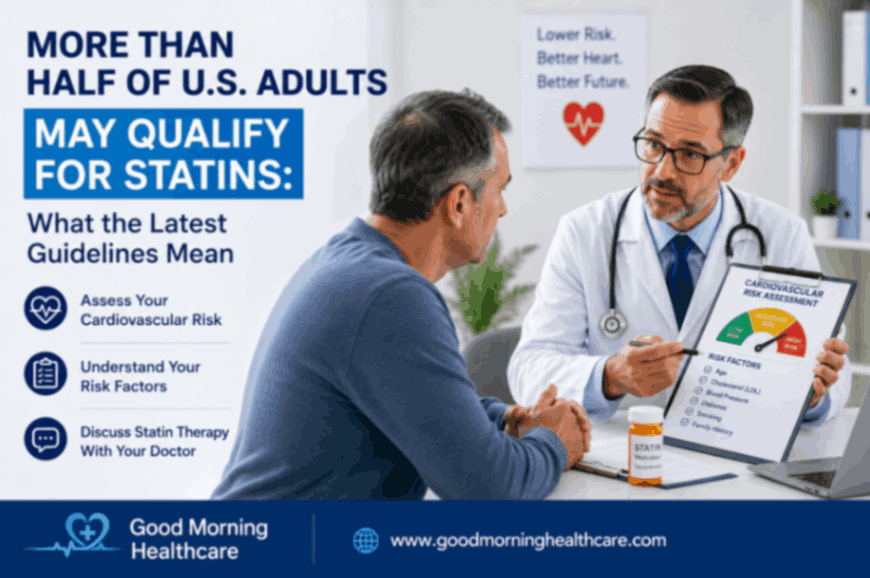
For years, cholesterol treatment focused on one number: your LDL, or “bad” cholesterol. But that’s changing. Today, doctors are looking at your overall risk for heart attack and stroke—not just your cholesterol level—when deciding whether a statin medication could help. As a result, millions more American May Now be eligible For Statins with The New Guidelines.
That does not mean half of adults should automatically start a statin. It means a larger share may meet the criteria for a conversation with their doctor.
Why statin eligibility can expand
Statins lower LDL cholesterol and reduce the risk of heart attack and stroke. They are already standard treatment for people who have had cardiovascular events, as well as for many people with very high LDL cholesterol or diabetes.
Rather than relying only on a total cholesterol cutoff, major clinical guidelines recommend estimating an individual’s 10-year ASCVD risk before deciding whether statin therapy is appropriate. The new recommendations from the American College of Cardiology and American Heart Association emphasize shared decision-making rather than prescribing statins based solely on cholesterol numbers.
This approach can bring more people into consideration for treatment. A 58-year-old with modestly elevated cholesterol, treated high blood pressure, and a smoking history may have a higher predicted risk than a younger person with a higher LDL level but no other risk factors. Age alone can move risk estimates upward, which is one reason eligibility can become common among middle-aged and older adults.
What the guidelines actually ask clinicians to consider
There is no single rule that says every adult above a certain age needs a statin. Recommendations from groups such as the American College of Cardiology, American Heart Association, and U.S. Preventive Services Task Force overlap in important ways, but they use somewhat different thresholds and evidence standards.
In practice, clinicians commonly look at whether a patient has established cardiovascular disease, an LDL cholesterol level of 190 mg/dL or higher, diabetes in midlife, or an elevated estimated 10-year cardiovascular risk. For people whose risk falls into a borderline or intermediate range, the decision is more individualized.
Risk-enhancing factors can matter in those cases. They include a strong family history of early heart disease, chronic kidney disease, inflammatory conditions such as rheumatoid arthritis or psoriasis, persistently elevated triglycerides, and certain pregnancy-related complications. Social conditions, access to nutritious food, and the ability to afford and consistently take medication can also shape real-world cardiovascular risk and treatment success.
A coronary artery calcium scan may help when the decision remains uncertain. The test looks for calcified plaque in the heart’s arteries. A higher calcium score can support starting a statin, while a score of zero may allow some patients to delay medication, depending on their full risk profile. It is not necessary for everyone and is not a substitute for a standard clinical assessment.
What broader statin eligibility means for patients
For consumers, the practical takeaway is not to self-prescribe based on an online calculator or a single cholesterol result. Ask for a cardiovascular risk assessment at a routine visit, particularly if you are between 40 and 75, have diabetes or high blood pressure, smoke, or have close relatives with early heart disease.
The discussion should cover expected benefit, potential side effects, medication interactions, cost, and personal preferences. Muscle symptoms are the concern patients raise most often. Serious complications are uncommon, but side effects deserve attention because switching the dose or type of statin can often help. Statins can slightly increase blood sugar levels in some people, a trade-off clinicians weigh against the medication’s cardiovascular benefit.
Lifestyle changes remain part of the plan, not a failed alternative to medication. Regular activity, smoking cessation, blood pressure management, sleep, and eating patterns that support heart health can lower risk whether or not a statin is prescribed.
What it means for providers and payors
A larger eligible population raises operational questions beyond the exam room. Providers need reliable risk-calculation workflows, clear follow-up processes, and support for patients who stop medication because of symptoms or confusion. Payors face the related challenge of improving preventive medication access while avoiding one-size-fits-all outreach that overlooks individual risk and patient choice.
Digital tools can make risk scoring easier, but they should not reduce a nuanced clinical decision to a notification in an electronic record. The best use of these tools is to identify patients who may have been missed, then create time for a meaningful medication conversation.
If your risk profile has changed because of age, a new diagnosis, blood pressure, or family history, a cholesterol check and clinician-guided risk review can provide a clearer answer than any headline about eligibility.
Who should consider taking a statin?
Many adults between 40 and 75 years old may qualify for statin therapy if they have one or more cardiovascular risk factors, including:
- High LDL cholesterol
- Diabetes
- High blood pressure
- Smoking history
- Family history of early heart disease
- Elevated 10-year ASCVD risk
The decision should always be made with a healthcare provider after reviewing your overall cardiovascular risk rather than a single cholesterol result.
Frequently Asked Questions
Can you qualify for a statin even if your cholesterol isn’t very high?
Yes. Current guidelines consider your overall cardiovascular risk—including age, blood pressure, diabetes, smoking history, and family history—not just LDL cholesterol.
What age do doctors usually recommend statins?
Most guidelines focus on adults aged 40 to 75 who have cardiovascular risk factors, although recommendations vary based on individual health history.
Do statins have side effects?
Most people tolerate statins well. Muscle aches are the most commonly reported side effect, while serious complications are uncommon. Your healthcare provider can often adjust the medication or dosage if side effects occur.
Can lifestyle changes replace statins?
Healthy eating, regular exercise, weight management, and smoking cessation are essential for everyone. For people at higher cardiovascular risk, lifestyle changes and statins are often used together rather than as alternatives.
Thank you, You will be automatically subscribed to the our newsletter.