
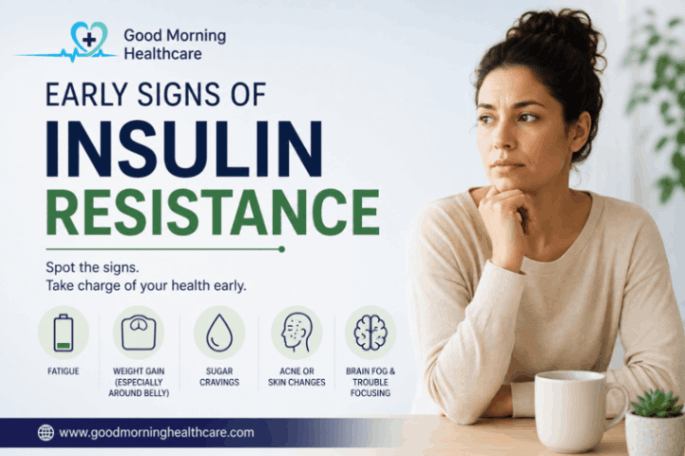
A person can have insulin resistance for years while routine life feels mostly normal. That is part of what makes the early signs insulin resistance can cause so easy to overlook: they often resemble stress, poor sleep, aging, or the effects of a busy schedule. But insulin resistance is a major driver of prediabetes, type 2 diabetes, fatty liver disease, and cardiovascular risk, so noticing patterns early can create a useful opening for prevention.
Insulin resistance is not a diagnosis someone can make from a single symptom or a home glucose reading. It is a metabolic pattern that needs clinical context. Still, certain changes can help people and clinicians decide when testing is worth discussing.
What insulin resistance means
Insulin is a hormone made by the pancreas. Its central job is to help move glucose, or blood sugar, from the bloodstream into muscle, fat, and other cells to be used or stored for energy.
With insulin resistance, cells do not respond to insulin as efficiently as they should. The pancreas initially compensates by producing more insulin, often keeping blood glucose in a normal range for a time. That compensation is why standard glucose results can look normal even as metabolic risk is building.
Over time, the pancreas may not be able to keep up. Blood sugar can rise into the prediabetes range and, later, the diabetes range.
Early signs of insulin resistance are often subtle
The signs below are clues, not proof, and they overlap with many other health issues.
– More hunger or energy crashes after meals
Feeling unusually hungry soon after eating, craving carbohydrate-heavy foods, or having a midafternoon energy slump may raise questions when these patterns are persistent. Some people describe feeling shaky, irritable, tired, or unable to focus if meals are delayed.
– Weight gain around the abdomen
A larger waist circumference is associated with higher cardiometabolic risk. Someone does not need to be in a larger body to have insulin resistance, and body size alone cannot diagnose it. But abdominal weight gain can be a meaningful signal to review blood pressure, cholesterol, blood sugar, sleep, and activity levels together.
– Dark, velvety skin patches or skin tags
Acanthosis nigricans refers to darker, thicker, sometimes velvety skin, commonly seen on the neck, underarms, groin, or knuckles. It can be associated with high insulin levels and is one of the more visible possible signs of insulin resistance.
Changes in blood pressure or cholesterol
Insulin resistance often travels with a cluster of cardiovascular risk factors. These can include elevated triglycerides, low HDL cholesterol, higher blood pressure, and increased waist circumference. Because most of these changes do not cause noticeable symptoms, annual preventive visits and basic lab work can be more revealing than how someone feels day to day.
For healthcare professionals and population-health teams, this is also a reminder that diabetes prevention cannot be separated from heart-health screening.
Polycystic ovary syndrome or a history of gestational diabetes
Polycystic ovary syndrome, or PCOS, is strongly linked with insulin resistance. Irregular periods, acne, excess facial or body hair, difficulty with weight management, or infertility can prompt an evaluation for PCOS and related metabolic risks. Not everyone with PCOS has insulin resistance, but routine screening is often part of appropriate care.
A history of gestational diabetes is another significant risk marker. Blood sugar may return to normal after pregnancy, yet future risk of prediabetes and type 2 diabetes remains higher.
Who should consider screening sooner
Routine screening recommendations vary by age, body size, and clinical history. The practical takeaway is that people should not wait for obvious symptoms if they have risk factors. Family history of type 2 diabetes, previous prediabetes, PCOS, gestational diabetes, high blood pressure, abnormal cholesterol, sleep apnea, limited physical activity, or certain medications can all change the conversation.
Race and ethnicity are also relevant to risk assessment because diabetes prevalence and risk may occur at different body-size thresholds across populations. Screening should be individualized rather than reduced to a one-size-fits-all cutoff.
How clinicians evaluate possible insulin resistance
There is no single perfect test used in every primary care setting. Clinicians commonly use an A1C blood test, fasting plasma glucose, or an oral glucose tolerance test to identify prediabetes or diabetes. A lipid panel, liver enzymes, blood pressure measurement, waist circumference, and medication review can add important context.
If symptoms include frequent urination, intense thirst, unexplained weight loss, blurred vision, vomiting, or severe fatigue, prompt medical evaluation is appropriate. Those symptoms can indicate more significant blood sugar problems and should not be managed with internet advice alone.
What can help before diabetes develops
The first-line response is usually not a drastic diet or a punishment-based workout plan. Regular movement improves how muscles use glucose. That can mean structured exercise, but it can also mean walking after meals, strength training twice a week, taking movement breaks during sedentary work, or choosing activities a person will actually repeat.
Nutrition changes can focus on quality and consistency rather than eliminating every carbohydrate. Meals that include protein, fiber-rich plants, and unsaturated fats often produce steadier fullness and blood sugar responses than highly refined carbohydrates eaten alone.
Sleep and stress deserve equal attention. Chronic short sleep, untreated sleep apnea, and prolonged stress can worsen insulin sensitivity and make appetite regulation harder. Depending on a patient’s risk profile, clinicians may also consider medications such as metformin or newer weight-management therapies, but eligibility, cost, coverage, side effects, and long-term goals all matter.
A useful next step: bring patterns, not guesses
If insulin resistance is a concern, a short record can make a primary care visit more productive. Note family history, prior pregnancy-related glucose issues, current medications, changes in weight or waist size, sleep concerns, and any recent blood pressure or lab results. This gives the clinician more than a vague report of “feeling off.”
The goal is not to label every tired afternoon as a metabolic disorder. It is to recognize when a set of small signals deserves a closer look. Early action can be as practical as scheduling screening, asking for nutrition support, or taking a ten-minute walk after dinner. Those are modest moves, but they can shift the trajectory well before diabetes enters the picture.
[…] because switching the dose or type of statin can often help. Statins can slightly increase blood sugar levels in some people, a trade-off clinicians weigh against the medication’s cardiovascular […]