
Heart disease often develops quietly, long before it becomes an emergency. In fact, cardiovascular disease remains the leading cause of death in the United States, responsible for over 683,000 deaths each year—about 1 in every 5 deaths nationwide.
The impact is not limited to mortality. A heart attack occurs roughly every 40 seconds in the U.S., resulting in about 805,000 events annually, and more than 600,000 of these are first-time heart attacks. Even more concerning, an estimated 1 in 5 heart attacks are “silent,” meaning they occur without clear or recognizable symptoms.
Globally, the burden is even greater. Cardiovascular diseases account for approximately 17.9 million deaths per year, making them the number one cause of death worldwide. Nearly 1 in 20 U.S. adults over age 20 is already living with coronary artery disease, and almost half of adults have some form of cardiovascular disease risk factor such as hypertension or elevated cholesterol.
These numbers make one thing clear: heart disease is common, often hidden, and frequently underestimated.
That is why recognizing early warning signs matters.
The challenge: heart disease rarely starts dramatically
Many people expect heart problems to begin with sudden chest pain or collapse. But in reality, early symptoms are often subtle and easy to dismiss.
Cardiovascular specialists emphasize that the body often sends warning signals weeks, months, or even years before a major event occurs. The key is knowing what to look for—and not ignoring small but persistent changes.
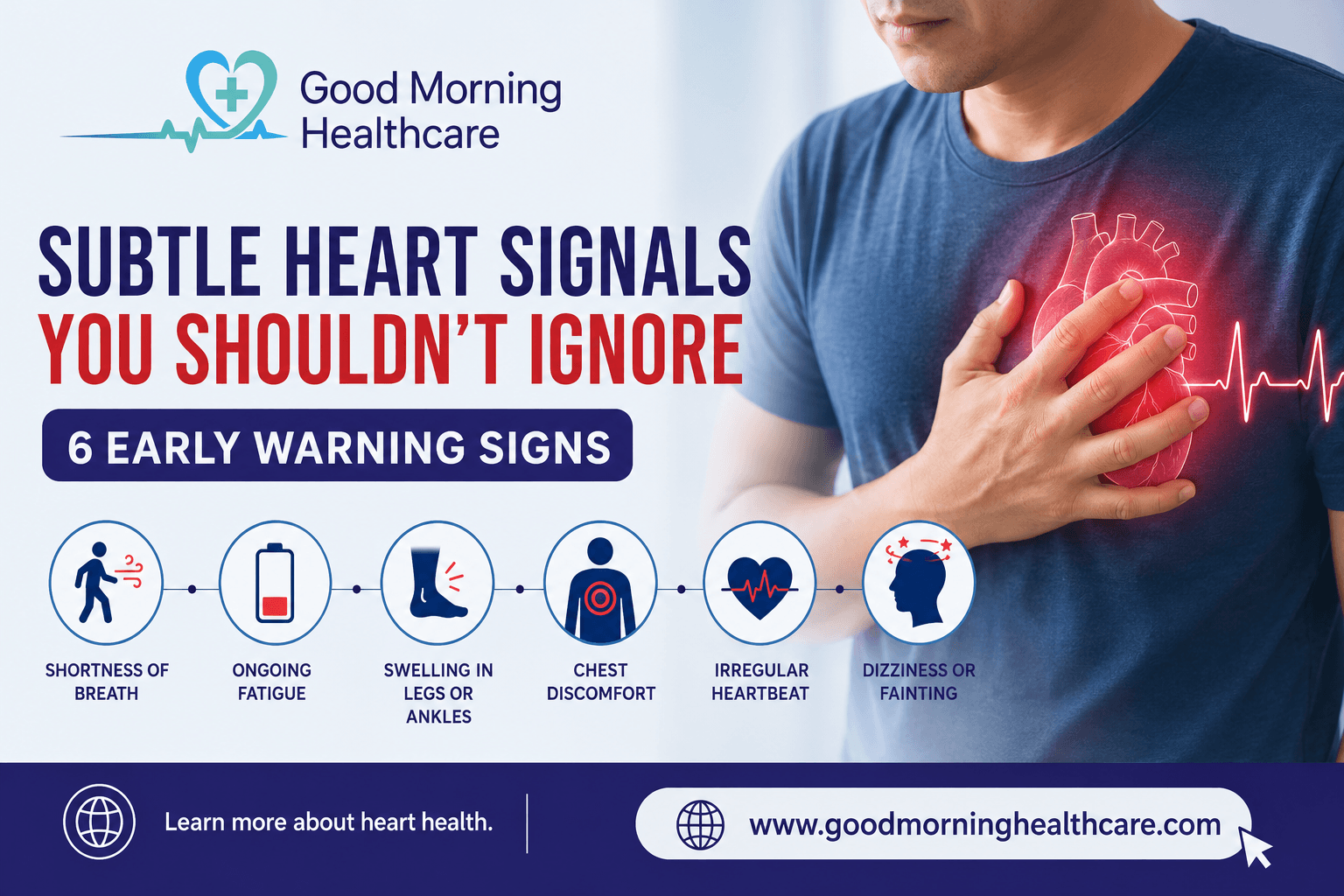
1. Shortness of breath with everyday activity
If walking short distances or climbing stairs suddenly leaves you winded, it may be more than just being out of shape.
When the heart is not pumping efficiently, oxygen delivery can decline. This may lead to breathlessness during activities that previously felt easy.
Some people also experience nighttime symptoms, such as needing extra pillows or waking up short of breath, which can be an important early clue.
2. Ongoing fatigue that doesn’t improve with rest
Fatigue is common—but heart-related fatigue feels different.
It is often described as a deep, persistent exhaustion that does not improve with sleep or rest. People may gradually reduce their activity levels without realizing why.
This happens when the heart cannot deliver enough oxygen-rich blood to meet the body’s demands.
3. Swelling in the legs, ankles, or abdomen
Swelling in the lower extremities or midsection may seem minor at first, but it can indicate fluid retention related to reduced heart function.
You might notice tighter shoes, sock marks, or unexplained weight fluctuations.
While swelling can have multiple causes, sudden or worsening changes should not be ignored.
4. Chest discomfort that feels unusual
Heart-related symptoms do not always present as sharp pain.
Instead, they may feel like pressure, tightness, fullness, burning, or squeezing in the chest. In some cases, discomfort may radiate to the arms, neck, jaw, or back.
A key warning sign is pattern: symptoms that appear with exertion or improve with rest deserve medical evaluation.
5. Irregular heartbeat or fluttering sensations
A racing, skipped, or fluttering heartbeat—known as palpitations—can be unsettling.
Occasional episodes are common and may be linked to stress, caffeine, or poor sleep. However, frequent or prolonged palpitations may signal an underlying heart rhythm issue.
If palpitations occur with dizziness, chest pain, or fainting, they should be evaluated promptly.
6. Dizziness or fainting spells
Lightheadedness can happen for harmless reasons such as dehydration or standing too quickly.
But repeated dizziness or fainting may indicate that the brain is not receiving enough blood flow due to a cardiac issue.
Even a single unexplained episode should be discussed with a healthcare provider.
Why early detection changes everything
One of the most important realities in cardiovascular care is that early symptoms are often subtle—but actionable.
People frequently adapt their lifestyle without realizing something is wrong, gradually reducing activity or attributing symptoms to aging or stress.
However, early evaluation allows for earlier intervention, which can significantly improve outcomes and expand treatment options.
In many cases, identifying heart issues early helps people maintain a more active and independent lifestyle.
Building heart health over time
While some risk factors such as age and genetics cannot be changed, many aspects of heart health are influenced by daily behavior.
Protective habits include:
- Regular physical activity
- Managing blood pressure and cholesterol
- Eating a heart-healthy diet
- Prioritizing sleep
- Reducing chronic stress
- Avoiding smoking
Together, these factors can significantly reduce cardiovascular risk over time.
A simple rule to follow
If a symptom is new, persistent, worsening, or affecting your normal routine, it is worth paying attention to.
Heart disease often begins quietly—but it rarely stays that way.
Listening to early signals can make a meaningful difference in prevention and long-term health.
Related resources
- Hartford HealthCare – Heart Health & Warning Signs
https://hartfordhealthcare.org/about-us/news-press/news-detail?articleId=72784 - American Heart Association – Heart Attack Warning Signs
https://www.heart.org/en/health-topics/heart-attack/warning-signs-of-a-heart-attack - CDC – Heart Disease Facts & Statistics
https://www.cdc.gov/heart-disease/data-research/facts-stats/ - Mayo Clinic – Heart Disease Overview
https://www.mayoclinic.org/diseases-conditions/heart-disease/symptoms-causes/syc-20353118 - World Health Organization – Cardiovascular Diseases
https://www.who.int/health-topics/cardiovascular-diseases
Final thought
Heart disease rarely begins with a loud warning. Instead, it often starts with small, gradual changes that are easy to overlook.
Recognizing those early signals—and acting on them—may be one of the most important steps in protecting long-term health.
Thank you, You will be automatically subscribed to the our newsletter.