
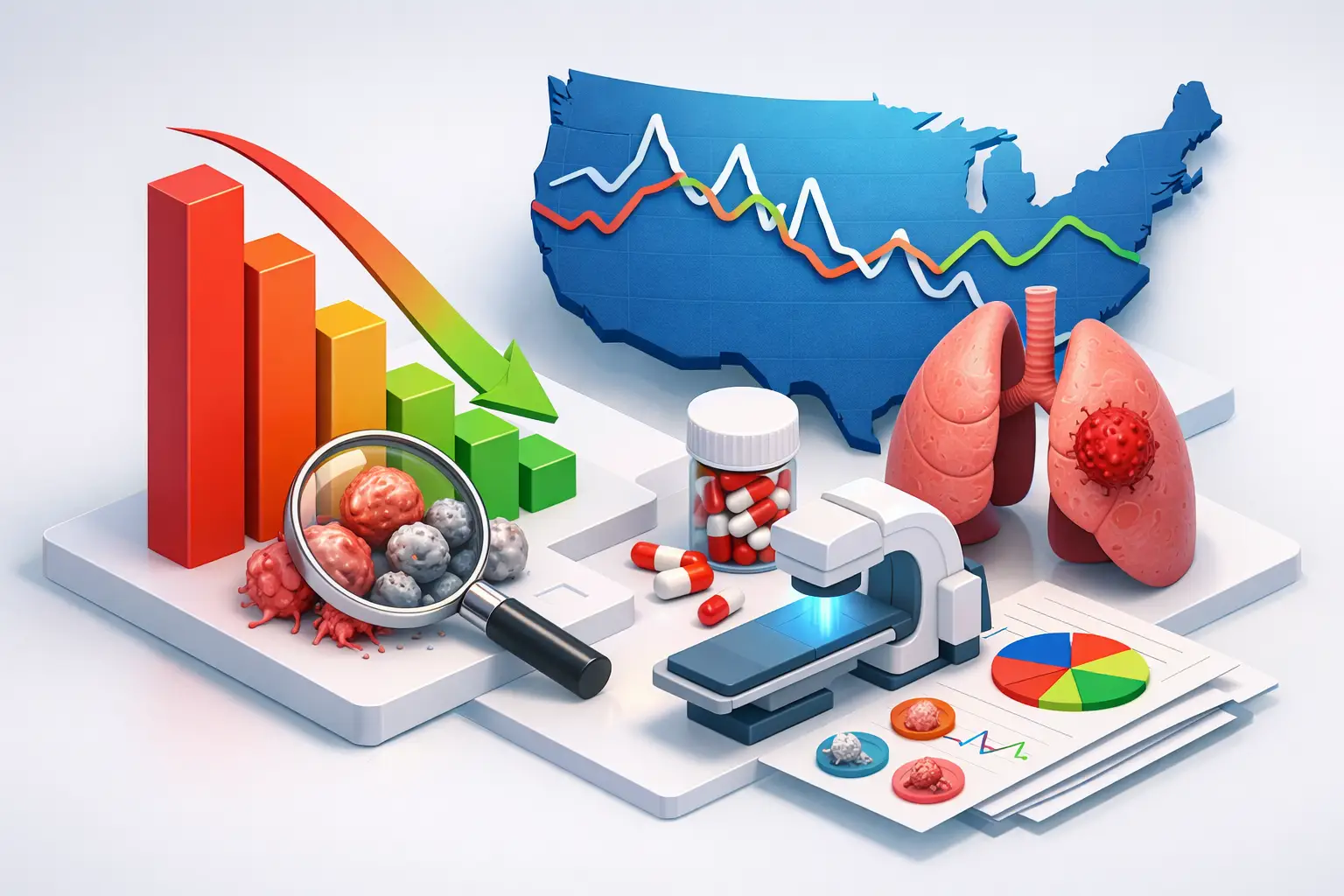
For more than 30 years, the broad direction of cancer mortality trends in the US has been encouraging: the age-adjusted cancer death rate has fallen steadily. But that headline can hide a more complicated reality. Progress is uneven by cancer type, race, income, geography, and age – and several warning signs are becoming harder for patients, clinicians, and health systems to ignore.
The most useful way to read the data is to hold two ideas at once. Cancer prevention, screening, and treatment have saved millions of lives. At the same time, the next phase of progress will depend less on celebrating a national average and more on reaching people who are still diagnosed late, treated late, or left out of preventive care.
What cancer mortality trends in the US show
The overall cancer death rate has dropped by roughly one-third since its peak in 1991, according to recent American Cancer Society estimates. That decline represents an estimated 4.5 million fewer cancer deaths than would have occurred if mortality rates had remained at their 1991 level.
The figure is age-adjusted, which matters. The US population is getting older, and cancer risk rises with age. Comparing age-adjusted rates helps separate changes in cancer outcomes from changes caused simply by having more older adults in the population.
The national decline does not mean fewer people are dying from cancer in every absolute sense. As the population grows and ages, the total number of cancer deaths can remain high. For 2025, the American Cancer Society projected more than 618,000 cancer deaths in the US. Cancer remains one of the country’s leading causes of death, and a diagnosis still affects families, employers, insurers, hospitals, and community health resources far beyond the treatment room.
Still, the long-term mortality decline is meaningful. It reflects real improvements in avoiding cancer, finding it earlier, and treating it more effectively after diagnosis.
Why the cancer death rate has fallen
The biggest gains have come from a combination of public health measures and clinical advances, not one breakthrough. Lower smoking rates have played an outsized role. Smoking remains a major cause of preventable cancer death, but decades of tobacco control, cessation support, and changing social norms have reduced deaths from lung cancer and several other tobacco-related cancers.
Earlier detection has also changed outcomes. Screening can find breast, cervical, colorectal, and lung cancers before symptoms appear, when treatment is often more likely to work. Colorectal cancer screening, for example, can identify and remove precancerous polyps before they become cancer. That is prevention as well as early detection.
Treatment has advanced rapidly, particularly for some blood cancers, melanoma, lung cancer, breast cancer, and certain prostate cancers. Precision medicines can target genetic changes within a tumor. Immunotherapies help the immune system recognize and attack some cancers. Better surgery, radiation planning, supportive care, and coordinated treatment have improved survival even when a cure is not possible.
These gains are not distributed equally across all cancers. Screening is not available for every type, and many aggressive cancers are still found after they have spread. Pancreatic, ovarian, liver, and certain brain cancers remain especially difficult to detect early and treat successfully.
Screening helps, but access determines who benefits
A screening recommendation on paper is not the same as a completed screening test. Patients may face high out-of-pocket costs, lack transportation, struggle to get time off work, or live far from a screening center or cancer specialist. They may also have no regular primary care clinician to recommend a test and follow up on an abnormal result.
For provider organizations and payors, this turns cancer mortality into an operational issue as well as a clinical one. Reminder systems, patient navigation, mobile services, language access, follow-up after an abnormal test, and coverage policies can determine whether early detection actually happens. A mailed stool test, for example, is only useful if a positive result leads promptly to diagnostic colonoscopy and appropriate care.
The warning signs behind the progress
The overall decline has slowed concerns about cancer in younger adults, especially for colorectal cancer. Colorectal cancer diagnoses and deaths have been rising in younger adults for years, prompting the recommended starting age for average-risk screening to move from 50 to 45. Adults with a family history, concerning symptoms, inflammatory bowel disease, or inherited risk may need assessment earlier.
This does not mean every younger adult needs invasive testing. It does mean symptoms such as rectal bleeding, persistent changes in bowel habits, unexplained anemia, ongoing abdominal pain, or unintentional weight loss should not automatically be dismissed because a person is under 50.
Some cancer patterns may also reflect risk factors that take years to show up in mortality data. Obesity, alcohol use, physical inactivity, diet, hepatitis infections, HPV, environmental exposures, and unequal access to care all influence cancer risk, though their effects vary by cancer type and individual circumstances. Researchers are still working to explain why some early-onset cancers are increasing. No single cause has been established.
Lung cancer offers a different lesson. Mortality has fallen substantially, but lung cancer remains the leading cause of cancer death in the US. Screening with low-dose CT can help people at high risk because of a significant smoking history, yet uptake remains far below that of several other recommended screening tests. Concerns about stigma, eligibility confusion, access to imaging, and follow-up can all get in the way.
Progress is not shared equally
National cancer statistics can obscure persistent disparities. Black Americans have historically faced higher overall cancer mortality than White Americans, although the gap has narrowed over time. Black men continue to have a substantially higher prostate cancer death rate than men in other racial and ethnic groups. Native American and Alaska Native communities experience disproportionate burdens from several cancers, including those linked to tobacco use, infection, and limited access to timely care.
Geography matters, too. Rural residents may travel long distances for oncology care, radiation treatment, mammography, or colonoscopy. States that have not expanded Medicaid and communities with high uninsured rates can face additional barriers to prevention and treatment. A patient can receive an early diagnosis and still have a worse outcome if specialist care, medication, paid leave, caregiving support, or transportation is out of reach.
Disparities are not simply about individual choices. They are shaped by the availability of primary care, insurance design, housing and food stability, workplace conditions, trust in institutions, and whether a health system has the capacity to deliver culturally responsive care. That is why cancer equity work requires more than awareness campaigns.
What the numbers can and cannot tell us
Mortality is one of the clearest measures of cancer progress, but it is a lagging indicator. A death recorded this year may reflect a diagnosis, exposure, or care barrier that began years earlier. New treatment gains may take time to appear in population-level mortality data.
Incidence and mortality also need to be read together. A higher incidence rate can signal a true rise in cancer, but it can also reflect better screening that finds cancers earlier. A falling mortality rate alongside stable or rising incidence may indicate that treatments and early detection are working. The details depend on the cancer type, stage at diagnosis, population, and time period being measured.
For consumers, this is a reminder not to let a positive national trend create false reassurance. Keeping recommended screening appointments, discussing family history, avoiding tobacco, limiting alcohol, staying physically active, and asking about persistent symptoms remain practical steps. None guarantees prevention, but each can reduce risk or improve the odds of finding cancer at a more treatable stage.
For healthcare leaders, the central question is increasingly specific: which patients are not benefiting from the progress? Tracking screening completion, time from abnormal test to diagnosis, stage at diagnosis, treatment delays, and outcomes by race, insurance status, language, and ZIP code can reveal gaps that an overall mortality average misses.
The next improvement in US cancer outcomes may not come only from a new drug. It may come from making proven prevention, screening, diagnosis, and treatment reachable for the people who have waited longest to benefit.
Thank you, You will be automatically subscribed to the our newsletter.