
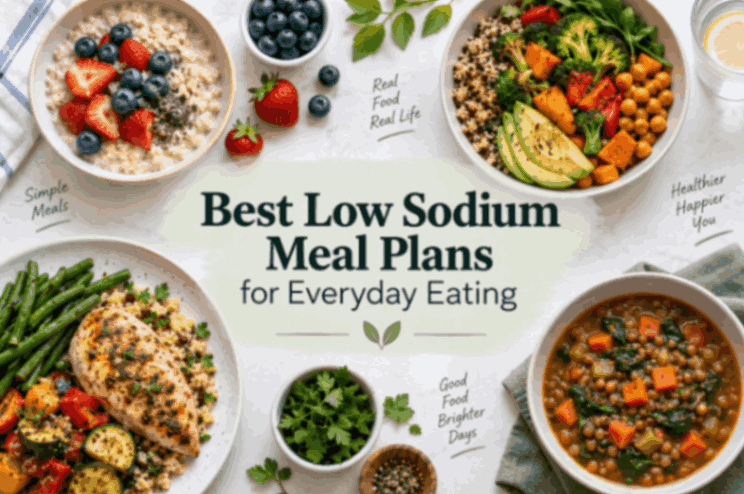
A low-sodium eating plan can look surprisingly ordinary: oatmeal with berries, a grain bowl with roasted vegetables, chicken or beans for dinner, and food that still tastes like food. The best low sodium meal plans are not built around bland substitutions or a single “healthy” frozen entree. They make sodium easier to manage across an entire week, especially when restaurant meals, sauces, breads, and convenience foods can add up quickly.
For many adults, the Dietary Guidelines for Americans recommend limiting sodium to less than 2,300 milligrams per day. Some people with high blood pressure, heart failure, kidney disease, or other conditions may be advised to aim lower. That target is personal, so anyone following a medically prescribed sodium limit should use it as the starting point.
What Makes a Low-Sodium Meal Plan Work?
The most effective plan is one you can repeat without feeling deprived. That usually means prioritizing minimally processed foods while leaving room for practical shortcuts, such as no-salt-added canned beans, plain frozen vegetables, rotisserie chicken with the skin removed, or lower-sodium broth.
A common mistake is focusing only on the salt shaker. Most dietary sodium comes from packaged and restaurant foods, not salt added at the table. Sandwich bread, deli meat, canned soup, pizza, salad dressing, cheese, and takeout can each contribute more sodium than expected.
The goal is not to label foods as perfect or off-limits. It is to identify where sodium is concentrated and make a few choices that protect the rest of the day. If lunch is a restaurant meal, dinner may need to be simpler. If you rely on canned foods, choosing no-salt-added versions can create breathing room for flavor elsewhere.
The Best Low Sodium Meal Plans Depend on Your Routine
There is no single best plan for every household. A person cooking for one needs different strategies than a caregiver preparing meals for a family, and someone with hypertension may need a more structured approach than someone simply trying to reduce processed food. These three models cover the most practical options.
1. The DASH-style meal plan
The Dietary Approaches to Stop Hypertension, or DASH, pattern is often the strongest starting point for people managing blood pressure. It emphasizes vegetables, fruits, whole grains, beans, nuts, low-fat dairy, fish, and lean proteins while limiting foods high in saturated fat and sodium.
A typical day might start with plain Greek yogurt, berries, oats, and unsalted walnuts. Lunch could be a quinoa bowl with chickpeas, cucumber, tomato, greens, lemon, olive oil, and herbs. Dinner might be baked salmon, roasted sweet potato, and broccoli with garlic and pepper.
The trade-off is preparation. DASH works best when staples are ready to use. Cooking a batch of grains, rinsing canned beans, and keeping washed produce available can prevent the plan from becoming a takeout-heavy week by Thursday.
2. The Mediterranean-style low-sodium plan
A Mediterranean approach is naturally adaptable for people who want meals with more flexibility and stronger flavor. It centers on vegetables, beans, seafood, whole grains, fruit, olive oil, nuts, and modest portions of poultry or dairy. Rather than relying on salt, it gets flavor from lemon, vinegar, garlic, herbs, toasted spices, and fresh ingredients.
Breakfast can be eggs with spinach, mushrooms, and fruit. For lunch, try lentil soup made with no-salt-added tomatoes and broth, paired with a simple salad. Dinner could be whole-wheat pasta with zucchini, white beans, olive oil, basil, and a small amount of Parmesan.
This approach does require attention to traditionally Mediterranean pantry foods that can be salty, including olives, feta, capers, anchovies, jarred sauces, and cured meats. They do not have to disappear, but portions matter. A tablespoon of feta used as a garnish is very different from a feta-heavy salad plus olives and bottled dressing.
3. The convenience-first meal plan
For busy households, an ideal plan that depends on daily cooking is rarely realistic. A convenience-first plan uses supermarket basics strategically: plain frozen vegetables, microwaveable brown rice with no added sauce, unsalted nuts, fruit, eggs, low-sodium canned beans, and simple proteins.
One day might include overnight oats made with milk and fruit; a turkey-and-avocado wrap using lower-sodium turkey and plenty of vegetables; and a sheet-pan dinner of chicken, peppers, onions, and potatoes. Another day could use a low-sodium canned bean chili served over rice with a side of frozen corn and lime.
Read labels closely here. “Reduced sodium” does not necessarily mean low sodium, and a product can still contribute a large amount per serving. The Nutrition Facts label lists sodium in milligrams and as a percent Daily Value. As a quick guide, 5% Daily Value or less per serving is low, while 20% or more is high.
A Simple Weekday Framework
Instead of assigning every meal in advance, many people do better with a flexible formula. Build breakfast around fruit, plain oats, eggs, or yogurt. At lunch, combine a protein, produce, and a grain or starchy vegetable. At dinner, fill roughly half the plate with vegetables, add a protein, and choose a carbohydrate such as brown rice, potatoes, corn, or whole-grain pasta.
For snacks, fruit, unsalted nuts, plain popcorn, carrots with a homemade yogurt dip, or a low-sodium bean dip are more reliable choices than crackers, chips, and packaged cheese snacks. None of these foods is mandatory. The point is to have options that do not force a sodium compromise before dinner.
Batch cooking can make this framework more workable. Roast two trays of vegetables, cook one grain, and prepare one protein at the beginning of the week. Then change the flavor profile with lemon and dill one night, cumin and lime another, or ginger, garlic, and rice vinegar later in the week. Check prepared sauces before using them, since soy sauce, teriyaki, barbecue sauce, and bottled marinades can quickly change the sodium math.
Where Meal Plans Often Go Wrong
A plan can be technically low in sodium and still fail because it is too restrictive, too expensive, or too unfamiliar. Replacing every food with a specialty “low-sodium” product can raise grocery costs without building lasting habits. For many people, the bigger win is buying fewer highly processed foods and using ordinary ingredients more often.
Another problem is treating sodium as the only nutrition measure. A low-sodium cookie is still a cookie, and a meal plan built mostly around packaged diet foods may be low in salt but low in fiber, protein, and overall satisfaction. Foods that support heart health tend to bring multiple benefits at once: potassium-rich produce, fiber-rich beans and grains, and less reliance on processed meats.
People taking diuretics, blood pressure medications, or medications that affect potassium should not make major dietary changes without checking with a clinician. Salt substitutes can contain potassium chloride, which may not be appropriate for people with kidney disease or those using certain medications. That is a small label detail with potentially significant consequences.
Make Flavor the Plan, Not an Afterthought
The best low sodium meal plans leave room for food culture, family preferences, and the occasional restaurant meal. Start by changing the meals you eat most often rather than trying to overhaul every bite. A homemade lunch two or three days a week, a lower-sodium soup, or a better pantry sauce can meaningfully reduce sodium over time.
When meals taste satisfying because of acid, herbs, texture, and fresh ingredients, lower sodium becomes less of a short-term rule and more of a routine worth keeping.
Thank you, You will be automatically subscribed to the our newsletter.