
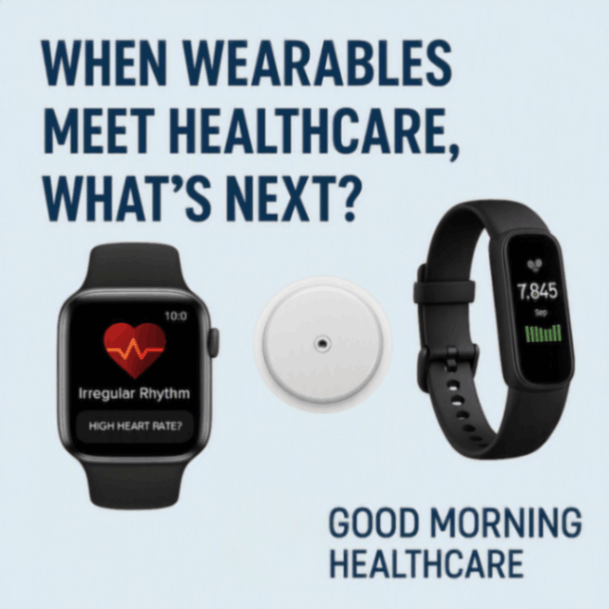
A smartwatch can detect an irregular heart rhythm before symptoms appear. A continuous glucose monitor (CGM) can reveal overnight blood sugar spikes that never show up during an office visit. A fitness tracker can demonstrate whether a patient recovering from surgery is becoming more active—or less.
These devices are no longer just wellness gadgets. They are becoming important clinical tools.
More than 35% of U.S. adults now use wearable health devices, according to the Pew Research Center, while the wearable medical device market is projected to surpass $150 billion globally by 2030. At the same time, healthcare organizations are investing heavily in remote patient monitoring as they shift toward more preventive, value-based care.
Yet one major challenge remains: most wearable data never becomes part of routine clinical care.
Wearables Provide Something Traditional Healthcare Cannot
Most healthcare decisions are still based on snapshots.
A blood pressure reading during an office visit represents a single moment. A quarterly A1C reflects average blood sugar over several months. Annual physicals provide only occasional updates.
Wearables offer something different: continuous health trends.
For providers, this can help answer important questions:
- Is a patient’s resting heart rate increasing after starting a new medication?
- Has activity dropped after knee replacement surgery?
- Are overnight glucose readings improving with a new diabetes treatment?
- Is poor sleep contributing to uncontrolled hypertension?
That context often provides a more complete picture than isolated office measurements.
Where Wearables Already Improve Care
Healthcare organizations are seeing the greatest success when wearable data answers a specific clinical question rather than simply collecting more information.
Examples include:
- Continuous glucose monitors (CGMs) helping patients with diabetes improve time-in-range and reduce hypoglycemia.
- Smartwatches identifying possible atrial fibrillation (AFib), allowing earlier medical evaluation.
- Remote monitoring programs tracking blood pressure in patients with hypertension.
- Monitoring activity and weight after hospitalization to identify patients at risk for readmission.
- Cardiac rehabilitation programs measuring exercise adherence between visits.
The common thread is simple: the data changes clinical decisions.
Why Integration Remains Difficult
Ironically, the problem isn’t the wearable device.
It’s the healthcare system.
Electronic health records (EHRs) were designed around office visits, lab results, prescriptions, and billing—not thousands of data points generated every day by consumer devices.
Healthcare providers face several challenges:
- Different devices use different data formats.
- Many wearables aren’t fully integrated into EHR systems.
- Clinicians cannot realistically review minute-by-minute heart rate or sleep data for every patient.
- Many practices lack staff dedicated to reviewing remote monitoring data.
- Consumer devices vary in clinical accuracy depending on the measurement.
Even when data can be uploaded, providers still need workflows that determine:
- Who reviews the information?
- How quickly should alerts be addressed?
- Which trends require follow-up?
- How should everything be documented?
Without those answers, wearable data becomes more burden than benefit.
The Workflow Challenge Is Bigger Than the Technology Challenge
Many organizations initially assume wearable integration is an IT project.
In reality, it is a clinical workflow project.
For example:
If a smartwatch reports an abnormal rhythm at 9 p.m., who receives that alert?
If a patient uploads six months of sleep data before an appointment, who reviews it?
If a nurse identifies concerning trends, who contacts the patient?
Healthcare organizations that answer these questions before deploying wearable programs are generally seeing the strongest results.
What Consumers Should Do
Wearables can help people become more engaged in their health—but they should not replace medical care.
Consumers should:
- Track trends rather than individual readings.
- Share summaries instead of hundreds of screenshots.
- Ask their provider whether wearable data can be uploaded through the patient portal.
- Seek immediate medical attention for symptoms such as chest pain, fainting, or severe shortness of breath regardless of what a wearable shows.
A smartwatch notification is not a diagnosis, but it may be an important reason to contact your healthcare provider.
The Future of Wearables in Healthcare
Artificial intelligence will likely make wearable data far more useful by filtering millions of data points into clinically meaningful insights instead of overwhelming clinicians with alerts.
As interoperability improves through standards such as FHIR (Fast Healthcare Interoperability Resources) and remote patient monitoring programs continue to expand, wearable devices will become a more routine part of healthcare delivery.
The goal isn’t collecting more data.
It’s helping clinicians identify the few data points that truly change patient care.
Thank you, You will be automatically subscribed to the our newsletter.